
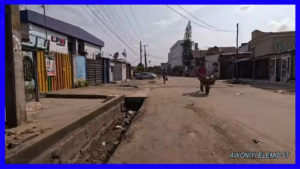
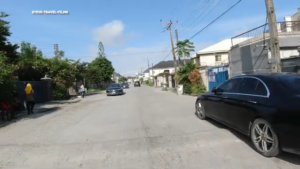




The gate was the first thing I noticed. Not because it was beautiful, though it was, dark raw steel with no markings, no compound number, no phone number painted on the wall the way every other property on that street announced itself. Just a gate. Closed. Two men sitting outside it on a wooden bench who were very clearly not sitting there for leisure. I had come to that street in Old Ikoyi to speak with a caretaker who managed three flats in a building next door, a man named Tunde who had called me because his tenants were being told to vacate by the end of the quarter. The building had been sold. He did not know to whom. He had found out the same way everyone finds out things in Lagos property — late, through a third party, with no paperwork to show for the conversation.
I stood outside that unmarked gate for a moment longer than I needed to, thinking about what it represented. Because it is not one gate. It is a pattern. And the pattern, if you have been paying attention along the Ikoyi and Banana Island corridor over the past three or four years, is impossible to miss once you know what you are looking for.
Old money in Lagos used to be visible in a particular way. The big compounds with the chipped paint and the old Mercedes parked under the mango tree and the security guard who had been there since 1987 and knew every visitor by face. Understated the way only people who had been wealthy for generations could afford to be understated. What is moving through Ikoyi now is different. It is not old money and it is not the straightforward new money of the 2000s oil boom, the kind that built glass-fronted mansions on Victoria Island and put gold fittings in bathrooms that leaked within two years. This is something quieter. More deliberate. And considerably larger in scale.
The buildings being acquired are not always the flashy ones. Tunde told me the building next to his had been a modest block of six flats, well-maintained but unremarkable, the kind of property a retired civil servant or a mid-level professional might have built in the 1980s and passed to their children. It sold for a figure he quoted to me that I will not reproduce here because I do not want to be accused of exaggerating, but which made me sit with my notepad for a moment before I wrote it down. The per-square-metre price was comparable to what you would find in parts of central London. Not Lagos by any standard measure that ordinary Nigerians use to understand value. A different market entirely, operating inside the same city, using the same road, the same danfo routes, the same EKEDC blackouts.
What changed my thinking on this, genuinely changed it, was a conversation I had with a property lawyer who works in this bracket. I had assumed, as most people assume, that this wave of acquisition was largely about residence. Trophy real estate for the seriously wealthy. He corrected me. A significant portion of what is being bought in Ikoyi right now is not being lived in, he said. It is being held. Valued in dollars, insulated from naira volatility, functioning as a store of value in a country where every other store of value has proven unreliable at some point in the last thirty years. Lagos land does not devalue. It has not done so in any sustained way in living memory. For someone with serious capital and serious exposure to naira risk, a block of flats in Ikoyi is not a real estate decision. It is a currency decision.


I have no particular quarrel with wealthy people buying property. That is not my argument. My argument is about what happens to the supply side of a housing market when a significant portion of its best-located stock is being removed from functional use and converted into dollar-denominated savings accounts with walls. The flats Tunde managed were affordable by Ikoyi standards. The people who lived there were lawyers, a university lecturer, a couple who both worked in banking. None of them could have bought in that neighbourhood. They rented. Now they are being asked to leave, and the building will sit behind a gate with no number and two men on a bench, and the street will be a little quieter, and the city will have one less building doing the work that buildings are supposed to do.
The developers and agents who facilitate these transactions will tell you this is how markets work. Capital moves to its highest use. I am not disputing the economics. I am disputing the framing that this has nothing to do with everyone else. It does. Every block absorbed into that holding pattern tightens supply somewhere further down the chain, and the pressure eventually reaches Ajah, reaches Sangotedo, reaches the family trying to find something reasonable along the Lekki-Epe corridor and finding that reasonable keeps moving further away from them.
Ikoyi is not your market if you are reading this from Abraham Adesanya Estate. But what happens in Ikoyi is your problem whether you chose it or not.
The Lagos property market is one chain. When the top of it gets pulled, you feel it at the bottom. That is not a theory. It is what has been happening, quietly, behind unmarked gates, for the past several years.


Lukmon Isiaq is a Lagos-based property researcher and street-level writer who has spent years studying the Ajah corridor the way most people never bother: on foot, in compounds, and in conversation with landlords, tenants, caretakers, and estate agents who operate where the listings end and the real story begins.
He is not a property developer. He is not a real estate marketer. He is the person you call before you sign anything. The one who has personally walked flood-prone streets after October rain, argued with agents over undisclosed charges, and documented how the Lagos housing market actually works for ordinary Nigerians trying to make serious decisions with serious money.
His writing on Abraham Adesanya Estate Lekki Ajah covers the Ajah corridor, Ikota Villa, Ajao Estate, Ogudu GRA, and the wider Lekki property market with one consistent standard: the honest version, not the brochure version.
He understands the gap between what a listing promises and what a tenant discovers on their first rainy season.


