
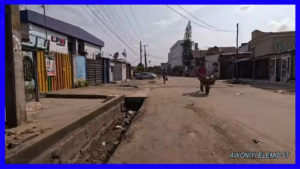
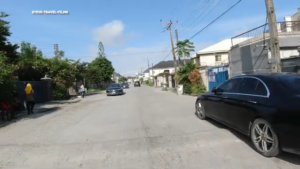




The agreement was four pages. Folded twice, slightly damp at the edges from the agent’s bag. Emeka spread it on the bonnet of his car because there was nowhere else to sit, and I stood beside him and read it with him, line by line, in the parking area behind a compound off Addo Road on a Tuesday afternoon when the heat was the kind that makes the air above the asphalt shimmer like something is about to happen.
We got to page three before we found the first one. Estate development levy. Fifty thousand naira, payable annually, not subject to negotiation. Emeka looked at the agent. The agent looked at his phone. Nobody explained what the levy was developing, or who was collecting it, or whether any account existed anywhere that could receive it.
That was four years ago. I have since counted, across different properties in Abraham Adesanya Estate and the broader Ajah corridor, seventeen distinct charges that appear in rent agreements or are verbally demanded at the point of collection, that have no basis in the Tenancy Law of Lagos State. Seventeen. Some of them have names that sound official. Most of them do not. All of them go into someone’s pocket, and that someone is almost never the person who owns the building.
Let me explain how this works, because the mechanics matter.
When a landlord engages an agent in this part of Lagos, the standard agreement is that the agent collects ten percent of the annual rent as commission from the tenant. That is already a conversation for another day, because in most places on earth it is the landlord who pays the agent, not the person the agent is supposed to be serving. But Lagos has its own logic and I have made peace with arguing about that particular injustice separately. The problem I am talking about today sits on top of the commission, underneath it, and sometimes hiding inside it.
The charges come in layers. There is the agreement fee, which is different from the commission, which is different from the legal fee charged for a document that no lawyer drafted and no court would recognise. There is the caretaker fee, collected upfront for a caretaker who you will spend the next two years trying to locate whenever your ceiling starts leaking. There is the generator maintenance levy, collected monthly by the estate management, separate from the diesel contribution you are already paying weekly, and separate again from the electrical connection fee that was charged before you moved in. I have seen all of these in Abraham Adesanya. I have the documents.


The one that still genuinely irritates me, the one I was not prepared for the first time I saw it, was what an agent on Ologolo Road described to a tenant I know as a tenancy registration fee. She was told it was a government requirement. She paid twelve thousand naira. There is no such requirement. There is no such registration. The money went into the agent’s account and the receipt had no letterhead.
Here is the uncomfortable thing that agents and estate managers would prefer I did not say directly: most of these charges persist because tenants from outside Lagos, and even tenants who grew up here but are renting for the first time, do not know what the Tenancy Law says and are too afraid of losing the property to ask questions. The agent knows this. The system is designed around this. The pressure of Ajah’s rental market, where a decent two-bedroom inside a functioning estate moves within days and you are competing against three other people who want the same flat, is the exact condition under which people sign things they have not read and pay things they have not questioned.
I watched a woman from Enugu pay six different fees across two weeks, none of which appeared on the original rent schedule she was shown, and by the time she had moved her things in, she had paid forty percent more than the rent she had budgeted for. She told me she knew something was wrong but she was tired and she had nowhere else to go and the school her children were transferring to was nearby. I did not lecture her. Lagos does not owe anyone a gentler version of itself just because you need a place to sleep.
The Tenancy Law of Lagos State, 2011, is a real document. It exists. It is not long. A determined person can read it in under an hour. It specifies what can and cannot be demanded from a tenant at the point of entry, and it gives you the right to request itemised receipts for every payment made.
Print that law. Take it with you when you go to inspect any property in this corridor. The agent who gets uncomfortable when you produce it is telling you everything you need to know before you hand over a single naira.


Lukmon Isiaq is a Lagos-based property researcher and street-level writer who has spent years studying the Ajah corridor the way most people never bother: on foot, in compounds, and in conversation with landlords, tenants, caretakers, and estate agents who operate where the listings end and the real story begins.
He is not a property developer. He is not a real estate marketer. He is the person you call before you sign anything. The one who has personally walked flood-prone streets after October rain, argued with agents over undisclosed charges, and documented how the Lagos housing market actually works for ordinary Nigerians trying to make serious decisions with serious money.
His writing on Abraham Adesanya Estate Lekki Ajah covers the Ajah corridor, Ikota Villa, Ajao Estate, Ogudu GRA, and the wider Lekki property market with one consistent standard: the honest version, not the brochure version.
He understands the gap between what a listing promises and what a tenant discovers on their first rainy season.


