


Ogudu GRA Phase 1 and Phase 2 are 2 distinct sections of a Government Reserved Area in Kosofe Local Government Area, Lagos State. Phase 1 is an older, more established residential community with larger plots and quieter streets. Phase 2 is a newer development with a mix of residential and commercial properties at lower price points.
For more context, read the previous guide: Ogudu GRA Estate Overview: Location, Amenities, and Property Guide.

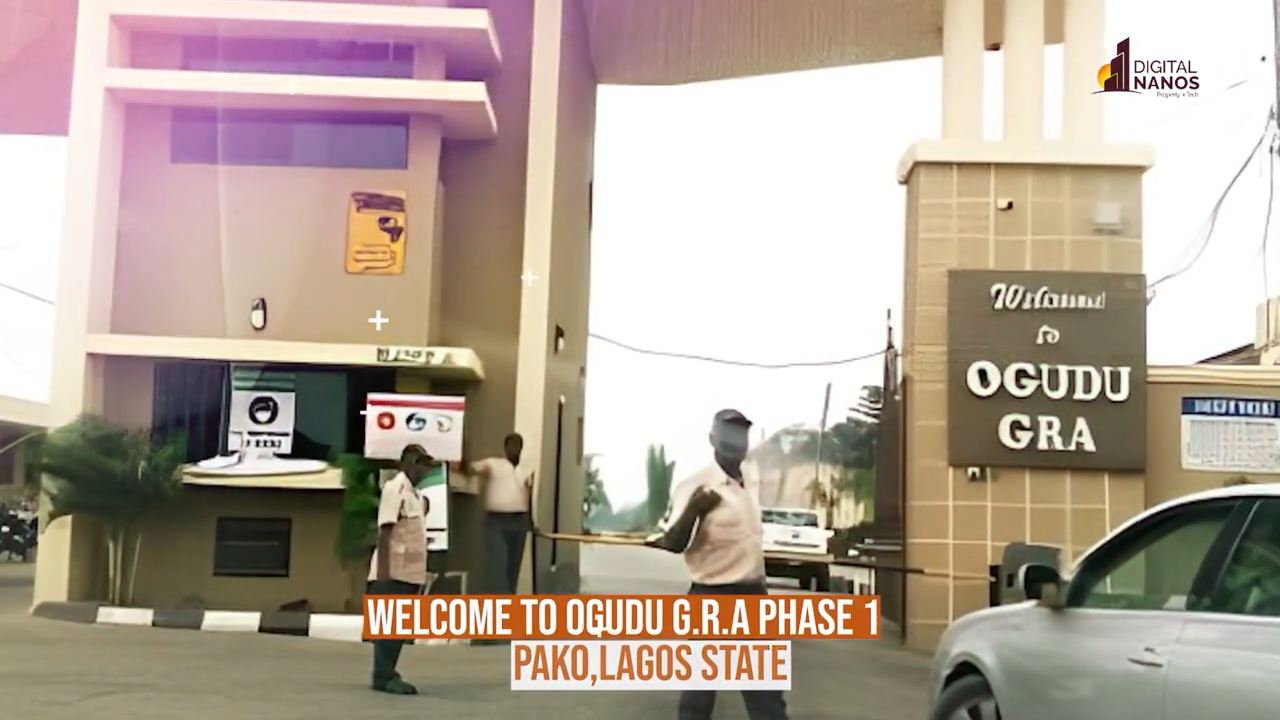
What Is Ogudu GRA Lagos?
Ogudu GRA is a Government Reserved Area located in Kosofe Local Government Area, Lagos State. GRAs in Lagos are planned residential communities originally designated during the colonial period for senior government officials. Ogudu GRA sits between Ogudu, Ojota, and the Third Mainland Bridge corridor, making it one of the most accessible upscale residential addresses on the Lagos mainland.
3 landmarks are accessible from Ogudu GRA:
- Ojota Bus Terminal – a major Lagos State Bus Rapid Transit interchange
- Maryland Mall – a retail and commercial center accessible within 10 minutes by road
- Third Mainland Bridge – providing direct access to Lagos Island and Victoria Island
What Is the Difference Between Ogudu GRA Phase 1 and Phase 2?
The 4 key differences between Ogudu GRA Phase 1 and Phase 2 are development age, plot size, land use, and property price.
Factor | Phase 1 | Phase 2 |
Development period | Older, colonial-era layout | Newer, post-independence development |
Average plot size | 1,000 sqm and above Source: Nigeria Property Centre Ogudu listings. | 600 to 800 sqm Source: Nigeria Property Centre Ogudu listings. |
Land use | Purely residential | Mixed residential and commercial |
Average rent (4-bed house) | ?5,000,000 – ?8,000,000 per year | ?2,500,000 – ?5,000,000 per year |
Average sale price (4-bed) | ?200,000,000 – ?500,000,000 | ?100,000,000 – ?250,000,000 |
Phase 1 is preferred by residents seeking quieter, purely residential surroundings. Phase 2 attracts businesses and residents who benefit from proximity to commercial services at lower rental costs.
What Are the Property Types in Ogudu GRA Phase 1 and Phase 2?
Both phases of Ogudu GRA offer residential properties across multiple categories. Phase 1 is dominated by detached and semi-detached houses on large plots. Phase 2 includes a higher proportion of terraced houses, blocks of flats, and mixed-use buildings.
Property types available in Ogudu GRA Phase 1 include:
- 4 to 6-bedroom detached houses with large private compounds
- Semi-detached houses with 3 to 5 bedrooms
- Renovated colonial-era bungalows on expansive plots
Property types available in Ogudu GRA Phase 2 include:
- 3 to 4-bedroom terraced houses
- Blocks of flats with 2 to 3-bedroom units
- Commercial-ground-floor buildings with residential upper floors
How Much Does It Cost to Rent in Ogudu GRA Phase 1?
Annual rent in Ogudu GRA Phase 1 ranges from ?3,000,000 to ?10,000,000, depending on property size, bedroom count, and compound features.
Property Type | Annual Rent Range |
3-bedroom semi-detached house | ?3,000,000 – ?5,000,000 |
4-bedroom detached house | ?5,000,000 – ?8,000,000 |
5 to 6-bedroom detached house | ?7,000,000 – ?10,000,000 |
Landlords in Ogudu GRA Phase 1 require 1 to 2 years’ rent in advance, consistent with Lagos State residential rental practice. Agency and legal fees of 10% each apply in addition to the stated annual rent. Source: LASRERA official real estate regulatory information.
How Much Does It Cost to Rent in Ogudu GRA Phase 2?
Annual rent in Ogudu GRA Phase 2 ranges from ?1,500,000 to ?5,000,000, with prices lower than Phase 1 due to smaller plot sizes and the mixed-use character of the development.
Property Type | Annual Rent Range |
2-bedroom flat | ?1,500,000 – ?2,500,000 |
3-bedroom terraced house | ?2,500,000 – ?4,000,000 |
4-bedroom semi-detached house | ?3,500,000 – ?5,000,000 |
Phase 2 offers more accessible entry points for families and professionals seeking a GRA address on the Lagos mainland at a lower cost than Phase 1.
What Are the Roads and Infrastructure Like in Ogudu GRA Phase 1 vs Phase 2?
Roads in Ogudu GRA Phase 1 are wider and better maintained than those in Phase 2. The Phase 1 road network follows a colonial-era grid layout with broad avenues and generous setbacks between the road boundary and individual property fences.
Phase 2 roads are narrower and carry higher traffic volumes due to commercial activity along several streets. Infrastructure across both phases includes tarred internal roads, drainage channels, and street lighting, though conditions vary by street and maintenance schedule.
The 3 main access routes into Ogudu GRA are:
- Ogudu Road – the primary arterial road connecting both phases to Ojota and Ketu
- CMD Road – linking the estate to Kosofe and Ikosi
- Ogudu-Ojota Link Road – providing access to the Third Mainland Bridge corridor
What Amenities Are Available in Ogudu GRA?
Residents of both Phase 1 and Phase 2 have access to amenities within Ogudu GRA and the surrounding Kosofe LGA communities.
Amenities accessible from Ogudu GRA include:
- Maryland Mall [internal link] – a retail and entertainment complex with supermarkets, cinemas, and bank branches, accessible within 10 minutes by road
- Schools – institutions such as Corona School Ogudu and private nursery and secondary schools operate within or near the estate
- Healthcare – private hospitals and clinics in Ogudu, Ojota, and Gbagada [internal link] serve GRA residents for outpatient and emergency care
- Banks and ATMs – branches of lenders such as Access Bank, GTBank, and First Bank are accessible along Ogudu Road and at Maryland
What Is Security Like in Ogudu GRA Phase 1 vs Phase 2?
Security in Ogudu GRA Phase 1 is stronger at the estate level, supported by lower commercial foot traffic and fewer unauthorized entry points. The predominantly residential character of Phase 1 reduces exposure to street crime compared to mixed-use areas.
Phase 2 has a higher volume of commercial activity, which increases public access to parts of the estate. Individual properties in Phase 2 rely more on private compound security than on estate-wide access control.
3 security measures are common to both phases:
- Perimeter fencing and private gates at the individual property level
- Neighbourhood Watch coordination among residents
- Lagos State Police coverage through the Ogudu Divisional Police Command
How Do Ogudu GRA Phase 1 and Phase 2 Compare in Property Value?
Property values in Ogudu GRA Phase 1 are consistently higher than Phase 2, driven by larger plot sizes, exclusive residential character, and limited commercial encroachment.
According to data from PropertyPro.ng and Nigeria Property Centre, land in Phase 1 sells at higher per-square-metre rates than comparable plots in Phase 2. The price premium on Phase 1 is supported by its limited housing stock and the prestige attached to the original colonial GRA designation.
Property appreciation across both phases has been steady over the past decade. Proximity to the Third Mainland Bridge and the Lagos Island business district [internal link] makes Ogudu GRA one of the stronger-performing residential land markets on the Lagos mainland, according to estate surveyors registered with the Nigerian Institution of Estate Surveyors and Valuers (NIESV).
Which Phase of Ogudu GRA Is Better for Residential Living?
Ogudu GRA Phase 1 is better suited to residents prioritizing quiet surroundings, larger compound space, and a more exclusive residential community. Phase 2 suits residents who need proximity to commercial services, lower rental costs, and flexibility on property type.
The choice between Phase 1 and Phase 2 depends on 3 factors:
- Budget – Phase 2 offers lower entry costs for both renting and buying
- Lifestyle preference – Phase 1 provides quieter, purely residential surroundings with larger plots
- Proximity to daily services – Phase 2 offers more on-street commercial access for banking, retail, and dining
Families with children and senior professionals seeking long-term residential stability consistently prefer Phase 1. Young professionals and small business owners who benefit from a mixed-use environment find Phase 2 more practical for daily operations.


Lukmon Isiaq is a Lagos-based property researcher and street-level writer who has spent years studying the Ajah corridor the way most people never bother: on foot, in compounds, and in conversation with landlords, tenants, caretakers, and estate agents who operate where the listings end and the real story begins.
He is not a property developer. He is not a real estate marketer. He is the person you call before you sign anything. The one who has personally walked flood-prone streets after October rain, argued with agents over undisclosed charges, and documented how the Lagos housing market actually works for ordinary Nigerians trying to make serious decisions with serious money.
His writing on Abraham Adesanya Estate Lekki Ajah covers the Ajah corridor, Ikota Villa, Ajao Estate, Ogudu GRA, and the wider Lekki property market with one consistent standard: the honest version, not the brochure version.
He understands the gap between what a listing promises and what a tenant discovers on their first rainy season.


