




The Notice Was Pasted on a Wednesday. By Friday, the Building Was Rubble.
The first time I saw a Lagos State demolition notice up close, it was stuck to the gate of a two-storey block in Ajah, somewhere between the estate junction and the road that slopes toward Elf. The paper was already curling at the edges from the morning humidity. Someone had tried to peel it off. You could see the fingerprints. The landlord, I was later told, had been served the notice and ignored it for three weeks because he believed, the way many Lagos landlords believe things, that the right phone call would make it disappear.
It did not disappear. The structure came down on a Friday morning while two of the four tenants were still inside trying to gather their things. One of them, a woman who worked at a school near Sangotedo, had paid two years upfront nine months earlier. She had a receipt. She had a tenancy agreement. She had nothing else, because the agreement did not mention anything about the property’s approval status, the building plan, the certificate of occupancy, or whether the landlord had any legal right to be building on that land in the first place.
This is the part of Lagos housing that nobody puts in the listing.
Lagos State has demolished over thirty residential structures this year, and the official reason is always the same: illegal construction, encroachment on government land, building without approved plans, or sitting on drainage setbacks that the developer thought nobody was watching. The demolitions happen in Ajah. They happen in Ibeju-Lekki, in Sangotedo, in the stretches along the expressway where new estates seem to appear overnight and everyone is in a hurry to collect rent before anyone asks questions. They happen close enough to Abraham Adesanya that you would be making a mistake to assume the address alone protects you.
I want to say something plainly: most of the people who lose their homes in these exercises are not the ones who built illegally. They are tenants. Ordinary Nigerians who saved for a year to afford the agency fee, legal fee, caution fee, and two years upfront that Lagos landlords have normalised as though this is simply how the world works. These tenants did nothing wrong except trust a system that was designed to extract money from them before revealing its true condition.
The agent who collected the commission is long gone. The landlord may fight in court for years. The tenant is the one sleeping elsewhere by Saturday.
What surprised me, and I do not surprise easily anymore, was when I spoke with a caretaker inside Abraham Adesanya Estate last dry season who told me that at least two properties within the estate itself had received informal government inquiries about setback violations. Not demolition notices, not yet, but the kind of quiet visit that precedes paperwork. He said this the way Lagosians say dangerous things, in a low voice, as a side comment, with his eyes on the gate. He was not alarmed. He had seen it before. That casual attitude to serious risk is exactly what makes this city so expensive to live in for people who are not from here.

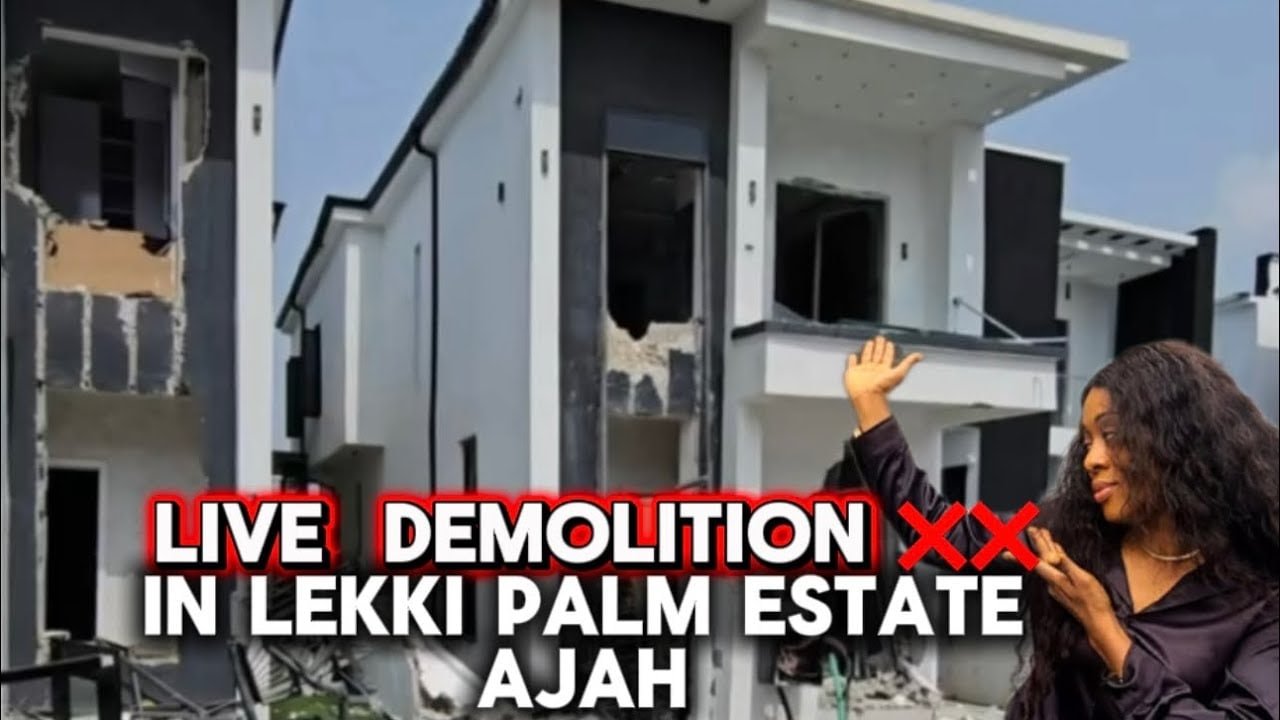
The Lekki-Epe corridor grew too fast. Developers who had no business building residential structures were collecting deposits on off-plan properties before the land had been properly documented. Drainage channels were covered, setbacks were ignored, approvals were purchased or forged or simply never sought because the buyer pool was desperate and the market was hot and Lagos does not always punish you immediately. It stores the punishment and delivers it later, with a government truck and a yellow-vested crew, at six in the morning.
If you are renting anywhere along this corridor, including inside Abraham Adesanya Estate, there are documents you are legally entitled to ask about and almost never do. The building plan approval from the Lagos State Physical Planning and Development Authority. The certificate of occupancy or, at minimum, the governor’s consent on a deed of assignment. Evidence that the structure sits where the law says it can sit. These are not obscure bureaucratic requests. They are the basic paperwork that tells you whether the building you are about to pay two years for has any legal right to be standing.
Most agents will not volunteer this information. Some of them genuinely do not know. Others know and are counting on you not to ask.
Ask.
Not because it guarantees safety, because Lagos is Lagos and nothing is fully guaranteed. But because an agent or landlord who cannot produce these documents, or who becomes hostile when you request them, is telling you everything you need to know before you hand over a single naira.
The woman from Sangotedo never got her two years back. Last I heard, she was renting a single room in someone’s face-me-I-face-you off Ogombo Road. She had receipts for everything. Receipts are not protection. Documentation of the property itself is protection. That is the only thing I am telling you today. Everything else is noise.


Lukmon Isiaq is a Lagos-based property researcher and street-level writer who has spent years studying the Ajah corridor the way most people never bother: on foot, in compounds, and in conversation with landlords, tenants, caretakers, and estate agents who operate where the listings end and the real story begins.
He is not a property developer. He is not a real estate marketer. He is the person you call before you sign anything. The one who has personally walked flood-prone streets after October rain, argued with agents over undisclosed charges, and documented how the Lagos housing market actually works for ordinary Nigerians trying to make serious decisions with serious money.
His writing on Abraham Adesanya Estate Lekki Ajah covers the Ajah corridor, Ikota Villa, Ajao Estate, Ogudu GRA, and the wider Lekki property market with one consistent standard: the honest version, not the brochure version.
He understands the gap between what a listing promises and what a tenant discovers on their first rainy season.


