

The gate was still hanging open when I got there, the padlock lying in the mud where somebody had dropped it in a hurry. Three mattresses were propped against the compound wall, the foam inside them blackened from the bottom up, the kind of waterline stain that does not lie. The caretaker, a thin man from Edo State who had been managing that block of flats off Orchid Road since 2019, told me the last tenant left on a Tuesday morning without collecting her security deposit. She just left. “She say make I keep the money,” he said. “She say she no want to come back.”
That was six months ago. Two of the four flats in that compound are still empty.
I have been watching this happen in slow motion across the Lekki corridor for the better part of three years. Not from an office, not from a report. From inside compounds, sitting on plastic chairs that belonged to people who no longer live there, listening to caretakers and landlords try to explain to themselves what went wrong. What went wrong is not complicated. What went wrong is that somebody sold swamp land with a beautiful gate and a generator, and for a few years the generator was enough to make you forget the water underneath.
Lekki Phase 1, Chevron, the estates pushing down toward Ajah, the developments carved out of the lagoon edge in a hurry between 2010 and 2020 because money was moving and land was cheap and nobody wanted to slow down long enough to ask where the water was supposed to go. It had to go somewhere. It always does. The rainy season of 2020 showed a lot of people exactly where it went. Through their doors, through their floors, through the walls of the ground-floor flats that were sold to them as investment properties and are now liabilities they cannot sell, cannot rent, and cannot afford to abandon because they still owe the bank.
That is the part that does not make it into the property listings. The mortgage does not stop because the apartment floods. The bank does not care that the drainage system in your estate was designed by someone who had never lived through a Lagos July. You still owe. The property is still collateral. And the developer who sold it to you has long since moved on to the next phase, with a new name on the gate and the same brochure photographs taken in December when everything looks fine.
I spoke with a man, I will call him Benson, who bought a two-bedroom flat in one of the gated estates along the Lekki-Epe Expressway in 2018. Eleven million naira, a loan for part of it, furnished the place himself, and rented it out for three years. The flooding started gradually, the way these things do. A little water in the compound after heavy rain, nothing serious. By 2022 it was serious. By 2023 his tenant had left, he could not find a replacement at any price, and he was still servicing the loan on a flat he could not use, could not sell at what he paid, and could not legally walk away from. He showed me the messages from his bank. They were not warm.
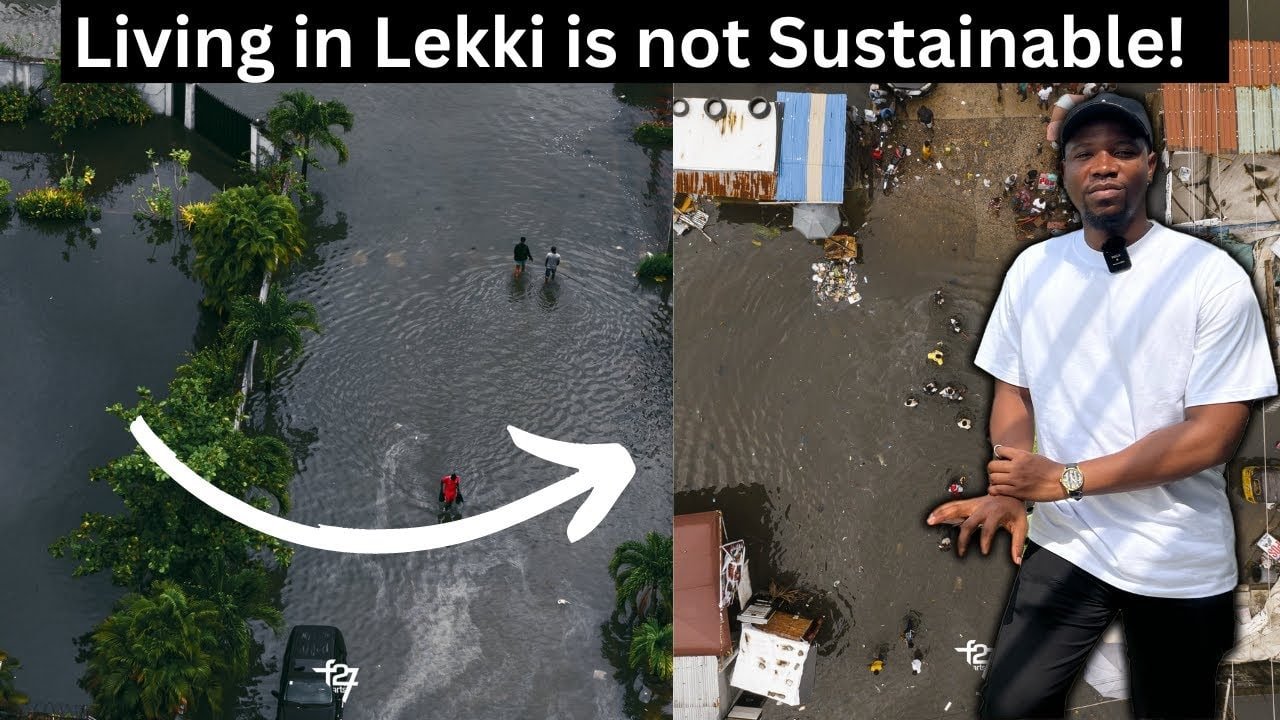
Here is what I want to be specific about, because this is a community platform and I am not here to frighten people without reason. Abraham Adesanya Estate, the original government-planned layout behind the roundabout where the roads narrow and the generator noise starts around six in the morning and does not apologise for itself, sits on higher ground than a lot of what got built after it. The flooding crisis eating into property values from Orchid Road to parts of Ikota is largely a story about what happened when developers stopped caring about elevation and started caring about floor tiles. The two things are not the same priority and the market is now making that distinction on behalf of people who did not make it themselves.
The expensive mistake Benson made, and that hundreds of buyers like him made across this corridor, was trusting the compound wall more than the survey plan. Nobody showed him the drainage map. Nobody told him the land his estate sat on was fill. The agent was not lying exactly. The agent just did not think it was his problem to raise.
That is the Lagos housing culture I find hardest to defend. Not the corruption, which is at least honest about what it is. The selective silence. The professional courtesy that agents and developers extend to each other that costs the buyer everything and costs the seller nothing.
If you are looking at property anywhere in this corridor right now, get the survey plan, find someone who is not selling you the property to read it with you, and visit the compound in July. Not December. Not during harmattan when the earth is cracked and dry and everything smells like fresh paint and possibility. Go in the middle of rainy season, stand in that compound, and watch where the water goes.
Everything else is a conversation someone is having with your money while you are standing outside it.

Lukmon Isiaq is a Lagos-based property researcher and street-level writer who has spent years studying the Ajah corridor the way most people never bother: on foot, in compounds, and in conversation with landlords, tenants, caretakers, and estate agents who operate where the listings end and the real story begins.
He is not a property developer. He is not a real estate marketer. He is the person you call before you sign anything. The one who has personally walked flood-prone streets after October rain, argued with agents over undisclosed charges, and documented how the Lagos housing market actually works for ordinary Nigerians trying to make serious decisions with serious money.
His writing on Abraham Adesanya Estate Lekki Ajah covers the Ajah corridor, Ikota Villa, Ajao Estate, Ogudu GRA, and the wider Lekki property market with one consistent standard: the honest version, not the brochure version.
He understands the gap between what a listing promises and what a tenant discovers on their first rainy season.
