

The man showed me a notice on his phone, standing outside a half-built compound past Eleko junction in the late afternoon heat. A state agency had informed his family that their land fell within the acquisition corridor for the Lagos-Calabar Coastal Highway. The letter was dated three months earlier, and the air around us smelled of petrol and wet concrete. No compensation figure was named and no consultation meeting had been proposed.
I had come to that part of Ibeju-Lekki to look at a property a client was considering, not to hear this story. But the compound owner wanted to talk, and the story he told was not unusual for this corridor. His family had already ceded land once before, to the Lekki Free Trade Zone. The process then had moved faster than any compensation ever did.
The Lagos-Calabar Coastal Highway is real infrastructure with real money behind it. A $1.26 billion financing deal for Phase 1 Section 2, connecting Eleko to Ode-Omi, was secured in December 2025. Construction has moved into high gear since that signing. The communities in the path of it have not received a publicly accessible resettlement or compensation plan.
This is not a new pattern in this corridor. The same Ibeju-Lekki communities have ceded land for the Lekki Free Trade Zone, the Dangote Refinery, the Lekki Deep Sea Port, and the proposed Lekki International Airport. That is four major acquisitions from the same indigenous settlements across roughly two decades. The benefits flowing back to those communities have not matched the scale of what was taken.
Property analysts are reporting 25 to 40 percent appreciation spikes within five kilometres of the coastal road corridor. That number circulates on real estate platforms as a buying signal. I want to be precise about what that number is actually describing. It is describing value accruing to investors while the people who lived on that land are being displaced.
I have sat at a table in Abraham Adesanya Estate with agents genuinely excited about Ibeju-Lekki as the next major appreciation corridor. That enthusiasm is not dishonest in a narrow technical sense. It is incomplete in a way that costs real people things money cannot easily repair.
A community representative told me something I have not stopped thinking about since. He said that every time a major project arrives in this corridor, officials describe it as development that will benefit the surrounding communities. He said the communities have learned to watch where the benefits actually land. They rarely land where the promise said they would.
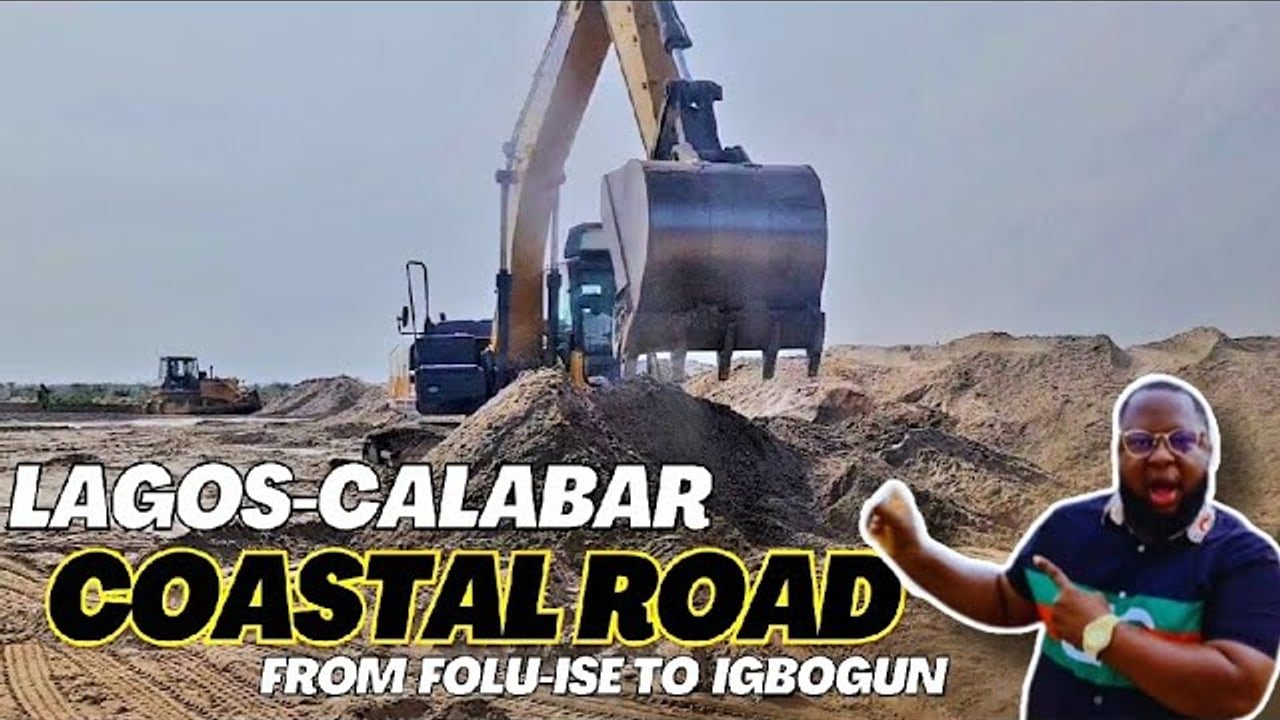
The Lagos State government and federal agencies have not released a comprehensive resettlement plan in any form accessible to affected residents. That silence is doing work. It creates a condition where investors can move freely on appreciation data while residents cannot make informed decisions about their own land. Both things are happening simultaneously in the same corridor.
I understand why people are buying in Ibeju-Lekki. The infrastructure trajectory is real and the value argument is coherent. What I am saying is that the appreciation story and the displacement story are the same story, and most property content on this corridor only reads one half.
The flood risk concerns raised by affected communities are also real and also being dismissed at the levels where decisions are made. The coastal highway route runs through low-lying terrain that already has documented drainage problems. Community members have raised this with state agencies directly. The response, where there has been one, has not addressed the substance of the concern.
What changes this is not a better communication strategy from the Lagos State government. It is legally enforceable resettlement obligations, publicly documented before construction displaces anyone, with compensation timelines that are binding rather than aspirational. That is not a radical demand. It is the minimum standard that infrastructure projects in accountable systems are supposed to meet.
If you are buying land in Ibeju-Lekki today, I am not telling you to stop. I am telling you to find out which communities previously occupied the corridor your investment sits in, and what happened to them. Not because that knowledge changes your transaction, but because it is the honest context for the decision you are making.
The road is being built and the money is secured. The question of who benefits and who absorbs the cost has already been answered in practice, even if nobody has written it down anywhere you can find.

Lukmon Isiaq is a Lagos-based property researcher and street-level writer who has spent years studying the Ajah corridor the way most people never bother: on foot, in compounds, and in conversation with landlords, tenants, caretakers, and estate agents who operate where the listings end and the real story begins.
He is not a property developer. He is not a real estate marketer. He is the person you call before you sign anything. The one who has personally walked flood-prone streets after October rain, argued with agents over undisclosed charges, and documented how the Lagos housing market actually works for ordinary Nigerians trying to make serious decisions with serious money.
His writing on Abraham Adesanya Estate Lekki Ajah covers the Ajah corridor, Ikota Villa, Ajao Estate, Ogudu GRA, and the wider Lekki property market with one consistent standard: the honest version, not the brochure version.
He understands the gap between what a listing promises and what a tenant discovers on their first rainy season.
