
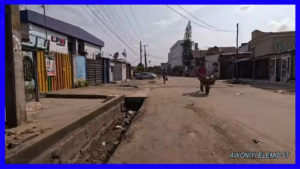
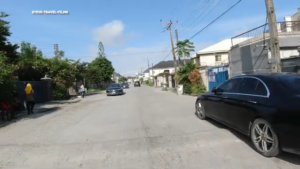




A man I know in Sangotedo kept a lump sum in his account for eighteen months, waiting for the right time to buy land. He was waiting for prices to correct. By early 2024, when he finally called me, the land he had been watching had doubled in naira price. His naira savings had meanwhile lost close to forty percent of their real purchasing power.
I am not going to tell you to rush into anything you have not verified. That is not what this is about. What I am going to tell you is that waiting for Lagos property prices to soften has been disproved by the last four years. Not by one person’s story, but by documented price indices and exchange rate data that nobody in the market is disputing.
For source context, see PwC Nigeria publications.
Land prices across prime Lagos corridors appreciated by 50 percent in 2023 alone, according to the NIESV Lagos Land Price Appreciation Index. In Abraham Adesanya Estate specifically, cumulative land price growth between 2018 and 2023 was 254 percent. That is not a developer’s projection or a marketing claim. That is a documented figure from an industry body, covering a period that included a global pandemic and two difficult election cycles.
The naira issue is where the real damage sits for people who understood property prices were rising but chose to hold cash anyway. In early 2022, one dollar exchanged for approximately 420 naira. By late 2023, that same dollar was exchanging for close to 1,800 naira. The person holding naira savings during that period did not just miss the property appreciation. They watched their actual purchasing power collapse.
I want to tell you about the other side of that Sangotedo story, because it clarifies something important. His neighbour, a woman who bought a half-plot in the same corridor in late 2021, paid what felt like a significant price at the time. By 2024, the market value of her land had grown enough to cover the full cost of a modest building on the plot. She was not a sophisticated investor. She simply made the decision and stopped waiting.

What is happening to the Ajah and Ibeju-Lekki corridor right now is not complicated to understand. The Fourth Mainland Bridge and the Lagos-Calabar Coastal Highway are both in active development, and infrastructure of that scale moves land values permanently. Abraham Adesanya Estate sits within the direct appreciation zone for both projects. That is not a coincidence. It is geography, and geography in Lagos has always been the primary driver of value.
The luxury end of the Lagos property market is telling the same story in larger numbers. Luxury property portfolios tracked by BusinessDay moved from 9.3 billion naira in December 2024 to 25.6 billion naira by February 2026. That is not fourteen months of ordinary market movement. That is a market responding to a structural shift in how Nigerians with assets are choosing to protect them.
For someone looking at Abraham Adesanya Estate specifically, the calculus is not abstract. This estate has an established residents’ association, functional road access, proximity to Ajah roundabout, and documented title history on many of the plots. Those are not marketing features. They are risk factors that have already been resolved by people who bought before you were looking. The price you pay today reflects that resolution, and the price you will pay in two years will reflect it even more.
The people who benefit most from telling you to wait are the ones who have already bought. Developers and agents talk about market timing the way a landlord talks about the right season to rent. They mean a timing that is convenient for them, not necessarily for you. The honest version of this conversation is that there is no evidence Lagos property corrects downward when you are ready to buy.
The man from Sangotedo bought land in 2024, at close to double the price he would have paid two years earlier. He is not angry about it. He says at least he bought, which is the most Lagos thing I have heard all year. The people I feel for are the ones still waiting for a correction that the market has not once delivered in the last decade.
Lagos property does not wait for you to be ready. It does not owe you a better entry point.


Lukmon Isiaq is a Lagos-based property researcher and street-level writer who has spent years studying the Ajah corridor the way most people never bother: on foot, in compounds, and in conversation with landlords, tenants, caretakers, and estate agents who operate where the listings end and the real story begins.
He is not a property developer. He is not a real estate marketer. He is the person you call before you sign anything. The one who has personally walked flood-prone streets after October rain, argued with agents over undisclosed charges, and documented how the Lagos housing market actually works for ordinary Nigerians trying to make serious decisions with serious money.
His writing on Abraham Adesanya Estate Lekki Ajah covers the Ajah corridor, Ikota Villa, Ajao Estate, Ogudu GRA, and the wider Lekki property market with one consistent standard: the honest version, not the brochure version.
He understands the gap between what a listing promises and what a tenant discovers on their first rainy season.


