
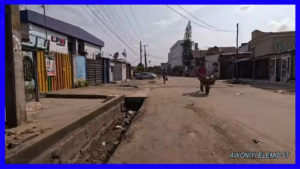
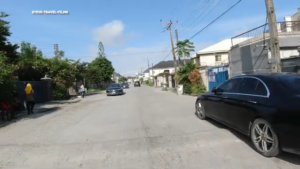




The flyer was taped to a gate on Agungi Road, which tells you something already. It said: "Premium Investment Opportunity — Lagos Mainland, Surulere and Yaba, Entry from ₦18m." Somebody had printed fifty of them and posted them from Lekki Phase 1 to Abraham Adesanya roundabout. I photographed it and kept walking.
Three weeks later, I was in a conference hall listening to developers, financiers, and government stakeholders say the same thing. They had slide decks and pressed clothes, but the message was identical to the flyer. This was the Exclusive Estate Conference 2026, and the consensus was that the Lagos Mainland is the next frontier. Surulere, Yaba, Gbagada, and Ogba were named specifically.
I have heard this conversation before, and I do not mean recently. The Mainland has been "the next frontier" in various forms since at least 2015. Every time Island prices climb past a threshold that shuts out mid-range buyers, someone redirects the narrative northward. The logic is always the same: lower entry prices, infrastructure coming, early mover advantage.
None of that logic is wrong. Mainland entry prices are genuinely lower, and infrastructure investment is real in certain pockets. But lower entry price is not the same thing as better value, and that distinction is what the conference slide decks were not spending much time on.
I spoke to a man named Bayo two months before the conference. He bought a flat in Gbagada in 2023, based on an agent’s assurance that infrastructure was coming and values would rise. The building had been "newly renovated." That renovation was paint and new tiles over a structure with serious foundation problems.
The foundation problems showed up in the first serious rainstorm, which came three months after he moved in. The title documents were a certified true copy of something nobody could trace to an original. He could not get his money back, and the agent’s number had changed. Bayo still lives in the flat because he has nowhere else to go right now.
The Mainland is not a bad place to invest. The problem is that conference momentum creates the same conditions every time: buyers move faster than due diligence allows, sellers know it, and agents exploit the gap. Nobody at the Exclusive Estate Conference was spending real time on the older building stock question, and they should have been.


A significant portion of Mainland housing was built between the 1970s and early 2000s under conditions Lagos building control would not pass today. Surulere has entire streets of buildings that look solid and are not. Gbagada has pockets of genuinely well-built housing and other pockets held together by decades of repairs stacked on earlier repairs. The difference between the two is not visible from the road.
On a Saturday morning in Ajah, the market noise starts around seven and the expressway slows from Chevron before eight. The Mainland is different in pace, different in smell, different in how neighbourhoods press against each other. Yaba has a particular density around the university corridor that does not exist anywhere else in Lagos. That density is also why title documentation in certain Yaba plots is complicated in ways that outside investors do not anticipate.
The title situation on the Mainland is not new and it is not small. Family land with partial approvals, excisions in process but not complete, assignments made without the consent of all parties who should have signed — these are not edge cases. They are common enough that any serious property lawyer working the Mainland keeps a file full of them. The conference mentioned this briefly and moved on.
The Mainland does offer real fundamentals: proximity to commercial activity, faster airport access, and middle-class residential demand that Island prices have been gradually pushing out. These are not invented talking points. Entry prices in Surulere and Gbagada are a fraction of comparable sizes on Lekki or Ajah. That gap will close eventually, and buyers who purchase carefully before it does will benefit.
The conference did not spend enough time on one question: how do you tell a Mainland property worth buying from one that only sounds like it? The building structure matters, and most buyers are not having it assessed. The title chain matters, and most agents will not walk you through it unless you insist. Infrastructure promises are not the same thing as infrastructure.
Mainland investment will work for people who do their homework in ways that conference momentum does not encourage. It will not work for people buying in the next six months because they heard the word "frontier" in a room and decided to move before they missed something. The people who made money on the Island made it by buying carefully, not by buying quickly. The Mainland is not different in that way.


Lukmon Isiaq is a Lagos-based property researcher and street-level writer who has spent years studying the Ajah corridor the way most people never bother: on foot, in compounds, and in conversation with landlords, tenants, caretakers, and estate agents who operate where the listings end and the real story begins.
He is not a property developer. He is not a real estate marketer. He is the person you call before you sign anything. The one who has personally walked flood-prone streets after October rain, argued with agents over undisclosed charges, and documented how the Lagos housing market actually works for ordinary Nigerians trying to make serious decisions with serious money.
His writing on Abraham Adesanya Estate Lekki Ajah covers the Ajah corridor, Ikota Villa, Ajao Estate, Ogudu GRA, and the wider Lekki property market with one consistent standard: the honest version, not the brochure version.
He understands the gap between what a listing promises and what a tenant discovers on their first rainy season.


