
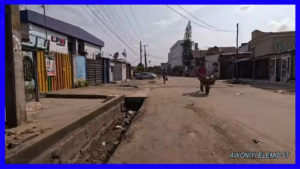
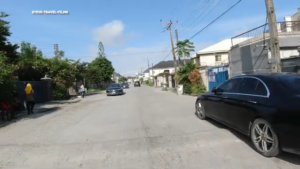




The first thing you notice when you enter the Jakande Estate in Lekki is the wall. Not the original boundary, which has been contested, encroached upon, and quietly redrawn so many times that nobody still living there can tell you with confidence where it used to end. The new wall. The one that belongs to the development going up on what residents will tell you, if you ask them carefully and they trust you enough, used to be common land. Children played there. Clothes dried there. It was not much, but it was theirs. Now it has a hoarding around it with a real estate company’s logo and a rendering of something that will cost more per flat than most of the estate’s residents will earn in five years.
I stood at that wall for a while. I was not surprised, exactly. But there is a particular feeling that comes from watching something be erased in front of you and knowing that the erasure is being done legally, or close enough to legally that the distinction barely matters.
Lateef Jakande built roughly thirty thousand housing units across Lagos during his time as governor. Thirty thousand. In less than four years. Low-cost, functional, unglamorous, deliberately priced for the Lagos that existed in 1980 and not the Lagos that property developers dream about. Teachers lived in those flats. Civil servants. Market traders who had managed to stabilise their income enough to pay a modest rent. The architecture was not beautiful. Nobody has ever claimed otherwise. But the intention was serious, and the execution, whatever its limitations, actually happened, which puts it ahead of most housing promises this city has made since.
What is happening to those estates now is not complicated. It is just unpleasant to say directly, so most people do not say it directly.
The estates that sit on land that has become valuable are being swallowed. Sometimes through outright illegality, encroachments that go unchallenged because the people being encroached upon do not have the resources or the connections to challenge them. Sometimes through the quieter mechanism of neglect, state governments that have allowed the infrastructure to deteriorate past the point of habitability and then found, conveniently, that the land must be redeveloped for the public good. The public in question is rarely the one that was already living there.
I spoke to a woman in the Jakande Estate off the Lekki axis last year, a retired school teacher who had lived in her flat for over two decades, who told me she had received a visit from two men she did not know who asked her, politely, whether she had considered selling her allocation. She had not considered it. She told them so. They left a phone number. She had not called it. But she kept the paper, and she showed it to me, and I recognised the company name from a development I had seen advertised three streets away.
That is how it begins. Politely.

Here is the thing that property developers and the government officials who enable them do not want examined too closely. The Jakande estates were not just housing. They were a policy position. They were an argument, made in concrete and plumbing, that a city government had an obligation to house its ordinary people and not merely its wealthy ones. When you demolish that argument, when you let it decay or sell it off or redevelop it into something that excludes the people it was built for, you are not just losing buildings. You are abandoning a position. You are saying, quietly and officially, that the city’s land belongs to those who can pay the most for it, and everyone else should make arrangements.
Lagos has been saying this more loudly every year. The Ajah corridor, where I spend most of my time, shows you a version of what happens to a city after it has finished saying it. The people who could not afford to stay in the places they knew moved further out. They are renting in places with no title documents and no drainage and roads that the government has not touched since the road was first laid. They are further from their jobs, their markets, their children’s schools. They are paying, in time and transport and dignity, for a housing policy that decided their needs were secondary.
Jakande understood something that the current market does not want to understand, which is that affordable housing is not charity. It is infrastructure. It holds a city together. When you remove it, the city does not become more efficient. It just becomes harder for the people doing the work that makes it function.
If you want to understand where Lagos housing is going, do not read the property listings. Go and look at what is happening to the estates that were built to house the people the listings do not speak to.
What you see there is the direction of travel.


Lukmon Isiaq is a Lagos-based property researcher and street-level writer who has spent years studying the Ajah corridor the way most people never bother: on foot, in compounds, and in conversation with landlords, tenants, caretakers, and estate agents who operate where the listings end and the real story begins.
He is not a property developer. He is not a real estate marketer. He is the person you call before you sign anything. The one who has personally walked flood-prone streets after October rain, argued with agents over undisclosed charges, and documented how the Lagos housing market actually works for ordinary Nigerians trying to make serious decisions with serious money.
His writing on Abraham Adesanya Estate Lekki Ajah covers the Ajah corridor, Ikota Villa, Ajao Estate, Ogudu GRA, and the wider Lekki property market with one consistent standard: the honest version, not the brochure version.
He understands the gap between what a listing promises and what a tenant discovers on their first rainy season.


