
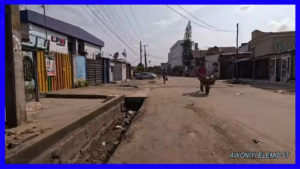
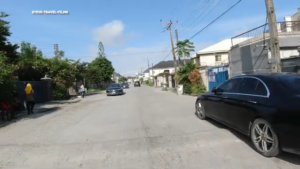




The foundation blocks were already going in when I arrived. Seven in the morning, the sun not yet at full strength but the heat already sitting on everything, two labourers mixing concrete near what had been, until approximately forty-eight hours earlier, the children’s play area of a residential estate off the Lekki-Epe Expressway. A woman in a house dress was standing at her ground floor window watching them. She had her phone out but she was not filming. She was reading something, scrolling with one thumb, the focused look of someone consulting a document she had read many times.
Her name was Mrs. Afolabi. She was the secretary of the residents’ association. And she was reading the approved estate layout plan, which she had obtained from the Lands Bureau three months earlier precisely because she had suspected something like this was coming.
I want to tell you how this ended before I tell you how it got there, because the ending is the part that nobody who knows Lagos real estate will immediately believe. The developer backed down. Fully. The blocks came out of the ground, the concrete mixer left, and the play area, such as it was, remained. The residents’ association also extracted a written commitment to repair the internal estate roads and establish a jointly overseen maintenance fund that neither the developer nor the estate management company could touch unilaterally. On paper, in ink, signed.
I have been covering property disputes in this corridor for years and I have seen residents fight developers maybe a dozen times. I have seen them win twice. This was one of them, and the reason it worked is not the reason most people would assume.
Let me go back to how it started. The estate had been fully sold and occupied for five years when the trouble began in earnest, though the friction had been building longer than that. The developer had retained the estate management company as a related entity, which is a common arrangement in Lagos and almost always a conflict of interest dressed up as a service. Service charges were collected reliably. Services were not delivered with the same reliability. The internal roads had developed the kind of potholes that embarrass a motorcycle and the perimeter lighting worked in the manner of something that had never been properly installed rather than something that had broken down. When residents raised complaints, the management company responded in the Lagos real estate tradition: acknowledgement without timeline, sympathy without action.
What broke everything open was the construction. When the labourers appeared on that Monday morning with their blocks and their mixer, the developer had not announced anything. No letter to residents, no notice, no meeting. The play area that appeared in the original estate brochure, the one used in the marketing materials, the one that several families had specifically cited when choosing the estate over alternatives, was simply being absorbed without explanation.


What I did not know until Mrs. Afolabi showed me her folder, the physical one with the tabbed dividers and the photocopies arranged in chronological order, was that the residents had been preparing for this for three months. Not reacting. Preparing. They had identified a lawyer in Ajah who specialised in land use matters, not a generalist, not a friend’s cousin, a specific person with specific relevant experience. They had pulled the approved development plan from the Bureau. They had documented every undelivered service promise with dates and amounts paid. They had done, in other words, exactly what the developer had counted on them being too disorganised and too individually frightened to do.
This is the part that actually changed how I think about these situations. I went to that estate expecting to document a loss. I had my angle ready, the familiar story about collective powerlessness, about how developers in this city structure their agreements and their relationships to make organised resistance effectively impossible. I was not entirely wrong about the strategy. I was wrong about the outcome, and the reason I was wrong is that I had underestimated what a residents’ association can accomplish when it is run by people who have stopped hoping the developer will do the right thing and started documenting everything instead.
Developers in Lagos count on something very specific: the assumption that residents will fight as individuals, that the person in flat 4B will complain to the caretaker while the person in flat 7A posts on WhatsApp while the person in flat 2C quietly decides it is not worth the stress. Divide the grievance, reduce the pressure. That strategy collapses the moment residents stop functioning as a collection of individuals and start functioning as an institution with records, legal standing, and the willingness to use both.
The residents of that estate are not exceptional people. They are nurses, civil servants, teachers, traders, a few people in corporate jobs. What they had was a secretary who believed in filing things properly and a chairperson who understood that the developer’s greatest advantage was time and that every month of delay cost the residents money and energy they could not recover.
If you live in an estate with a residents’ association that only holds meetings to share complaints, you are not protected. A residents’ association that keeps records, retains a lawyer on a basic advisory basis, and holds a copy of the approved estate plan is an entirely different thing. That difference is what the developer across from Mrs. Afolabi did not account for.


Lukmon Isiaq is a Lagos-based property researcher and street-level writer who has spent years studying the Ajah corridor the way most people never bother: on foot, in compounds, and in conversation with landlords, tenants, caretakers, and estate agents who operate where the listings end and the real story begins.
He is not a property developer. He is not a real estate marketer. He is the person you call before you sign anything. The one who has personally walked flood-prone streets after October rain, argued with agents over undisclosed charges, and documented how the Lagos housing market actually works for ordinary Nigerians trying to make serious decisions with serious money.
His writing on Abraham Adesanya Estate Lekki Ajah covers the Ajah corridor, Ikota Villa, Ajao Estate, Ogudu GRA, and the wider Lekki property market with one consistent standard: the honest version, not the brochure version.
He understands the gap between what a listing promises and what a tenant discovers on their first rainy season.


