

Record Highs and the People Who Will Never See That Money
There is a billboard on the expressway side, somewhere between the Ajah roundabout and the Shoprite end, that has been advertising luxury apartments at a price that I will not repeat here because I do not want anyone to think I am promoting it. The rendering on the billboard shows a swimming pool with the kind of blue that does not exist in Lagos water, a skyline that looks suspiciously like Dubai, and the words “Redefining Premium Living on the Lekki Corridor.” The actual site, which I walked past three months ago, was a cleared plot with a security man sitting on a plastic stool under a beach umbrella, and a foundation that had not moved in what the neighbours told me was close to eight months.
That billboard is the luxury property market in Nigeria, explained in one image. The record numbers are real. The distance between those numbers and the lives of people actually renting and buying in this corridor is also real, and the two things exist comfortably side by side because the people writing the headlines are not the people paying the rents.
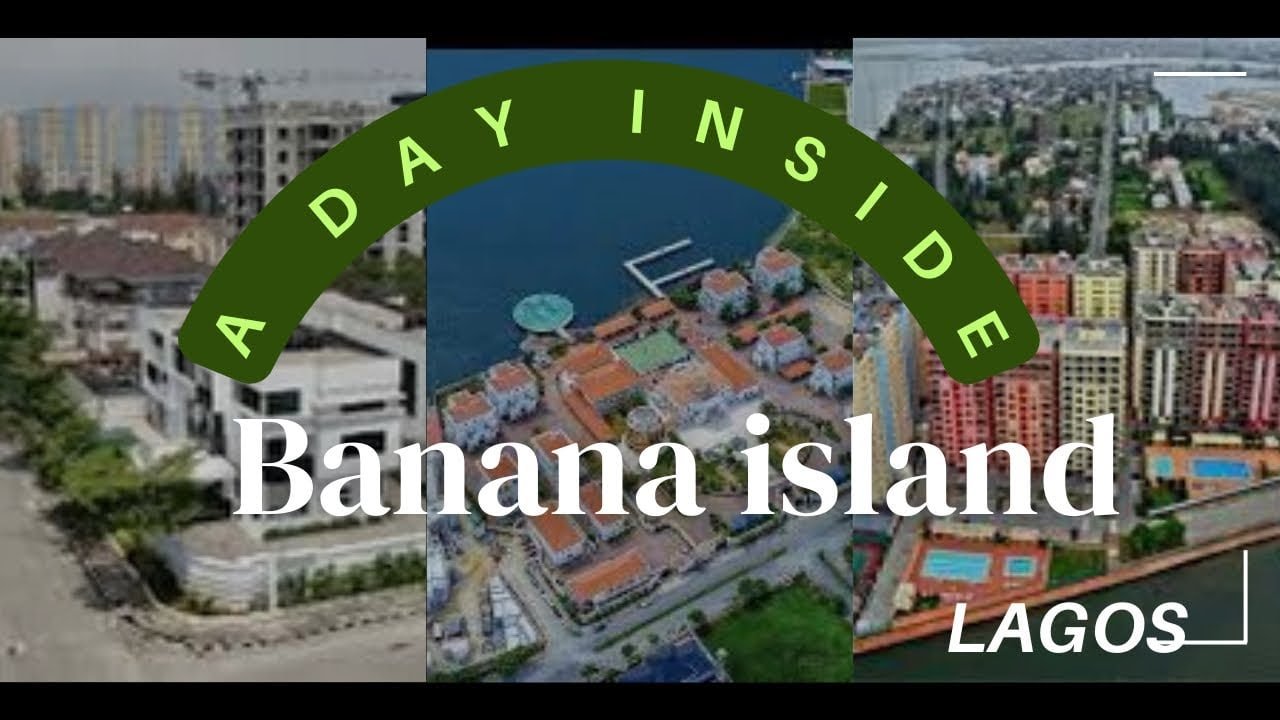
Nigeria’s luxury property sector posted record transaction values this year, and if you read the coverage, you would think the entire Lagos property market was ascending together in a cloud of progress. It is not. The gains are concentrated in three locations: Banana Island, Old Ikoyi, and Eko Atlantic. That is it. That is the whole story. Everything else, including the Ajah corridor, including Abraham Adesanya Estate and the roads that branch off it toward Ogombo and Sangotedo and Eleko, is being pulled along by a narrative that was written for a different class of transaction entirely.
What bothers me is not that luxury property is expensive. It is supposed to be expensive. What bothers me is what happens to the middle and lower rental market when developers start pricing their offerings against luxury benchmarks they have no business referencing. I spoke with a landlord on one of the interior streets of Abraham Adesanya Estate last November, a man who owns a modest block of four flats, nothing exceptional, standard finish, one of the bathrooms had been waiting for a proper tile repair since 2021. He told me, with complete confidence, that he had increased his rent by forty percent because, and I am giving you his exact words, “the market has gone up.” He had seen the same headlines. He believed they applied to him. His tenants, two of whom worked from home and relied on a generator that smelled like it had been running since the second republic, did not agree but had nowhere else to go at a price they could afford.
This is how a luxury headline becomes a poverty tax on ordinary renters. The record high trickles down not as investment or improvement but as justification for extraction.
I will tell you the thing that genuinely shifted something in my thinking. I was speaking with an estate agent near the Ajah market, a Saturday morning, the kind of heat that makes the zinc rooftops creak, and she told me she had stopped quoting asking prices to clients first. She would show them the property, let them fall in love with it or at least resign themselves to it, and then tell them the price. I asked her why. She said the gap between what people could afford and what landlords were now asking had become so wide that if clients heard the price before they saw the place, they would not even bother coming. She was not proud of this. She said it flatly, the way you describe a system you did not design and cannot fix but have to operate inside every day.
That is the Ajah corridor right now. Not Banana Island. Not Eko Atlantic. A market where agents are managing the psychology of shortage, where landlords are reading luxury headlines and applying them to properties that have not seen a maintenance investment in five years, and where tenants are making decisions under a level of pressure that removes most of the protections that deliberate decision-making is supposed to provide.
The developers building the actual luxury stock, the ones with the Dubai-blue swimming pools on their billboards, are largely not building for the people who live here. They are building for diaspora buyers, for return migrants, for corporate tenants on expatriate packages. When those units do not sell fast enough, which happens more often than the press releases suggest, the developer quietly opens a payment plan, drops the finish quality on later phases, and calls it “flexible luxury.” The billboard stays the same.
Here is what I know to be true: the record high that the headlines are celebrating has no direct relationship to what you will pay or receive for property in Abraham Adesanya Estate this year. The only number that matters for your transaction is the specific, comparable, recent rental or sale price of similar properties within five streets of the one you are considering. Everything else, every national index, every luxury benchmark, every billboard with a Dubai skyline, is noise designed by people who benefit from your confusion. Find the local number. Ignore everything else.

Lukmon Isiaq is a Lagos-based property researcher and street-level writer who has spent years studying the Ajah corridor the way most people never bother: on foot, in compounds, and in conversation with landlords, tenants, caretakers, and estate agents who operate where the listings end and the real story begins.
He is not a property developer. He is not a real estate marketer. He is the person you call before you sign anything. The one who has personally walked flood-prone streets after October rain, argued with agents over undisclosed charges, and documented how the Lagos housing market actually works for ordinary Nigerians trying to make serious decisions with serious money.
His writing on Abraham Adesanya Estate Lekki Ajah covers the Ajah corridor, Ikota Villa, Ajao Estate, Ogudu GRA, and the wider Lekki property market with one consistent standard: the honest version, not the brochure version.
He understands the gap between what a listing promises and what a tenant discovers on their first rainy season.
