
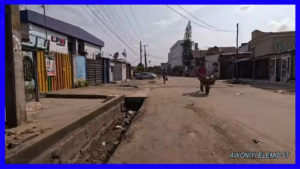
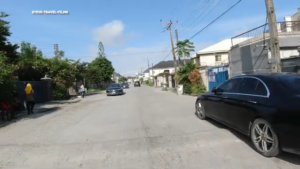




The land registrar’s office smelled like old paper and patience that had long since expired. I had been sitting on a wooden bench for two hours and forty minutes beside a man named Engineer Festus, who had been coming to this office, on and off, for eleven months trying to process a Certificate of Occupancy for a property his late father had built in Ilupeju in 1991. He had brought everything they asked for the first time. Then they asked for something else. Then something else after that. He showed me a list he had written in a small notebook, the additional requirements that had accumulated visit by visit, and by the time we stopped counting it was seventeen items. Some of them he had already submitted. Twice. “Lukmon,” he said, not even angry anymore, just tired in that specific Lagos way where the emotion has been replaced by pure calculation, “they are just eating.”
He was not wrong. He has never been wrong about that.
The Certificate of Occupancy is, in theory, the document that gives a Lagos property owner the clearest legal standing over their land. Derived from the Land Use Act of 1978, it is the state’s formal recognition that you occupy and have rights to a specific piece of ground. Without it, or without a registered deed that traces back to a valid title, what you have is a transaction history and a prayer. Lagos knows this. And Lagos has, over decades, built around that knowledge a processing system so layered with fees, unofficial requirements, consultant dependencies, and timeline unpredictability that the C of O has become less a government service and more a revenue mechanism for everyone positioned between you and the final stamp.
I have spoken to enough property owners along the Ajah and Lekki corridor to know that the experience Engineer Festus described is not exceptional. It is standard. The variation is only in how much extra you pay and to whom, and how honestly the person collecting it looks you in the eye while they do it. One landlord in Abraham Adesanya Estate told me his C of O process cost him, all-in, roughly forty percent more than the officially published government fees. He said this without particular bitterness. He had already factored it into how he thought about property in Lagos. “This is the system,” he said. “You cannot fight the system. You can only know it before you enter it.”
What changed my thinking on this, what moved it from frustration into something sharper, was a conversation I had with a property developer based in Abuja who had recently completed a residential project in Accra before bringing a similar project to Lagos Island. He sat across from me and went through the comparison without being asked to. Ghana’s title registration process: faster, cheaper, more predictable. Rwanda’s: considerably more streamlined. South Africa’s: not perfect but with functional timelines and published fee structures that did not expand based on who you knew or what you were willing to add to make things move. He was not romanticising those countries. He was simply reporting what it had cost him in time and money to do the same category of thing in different places. Lagos was not competitive. Not even close.

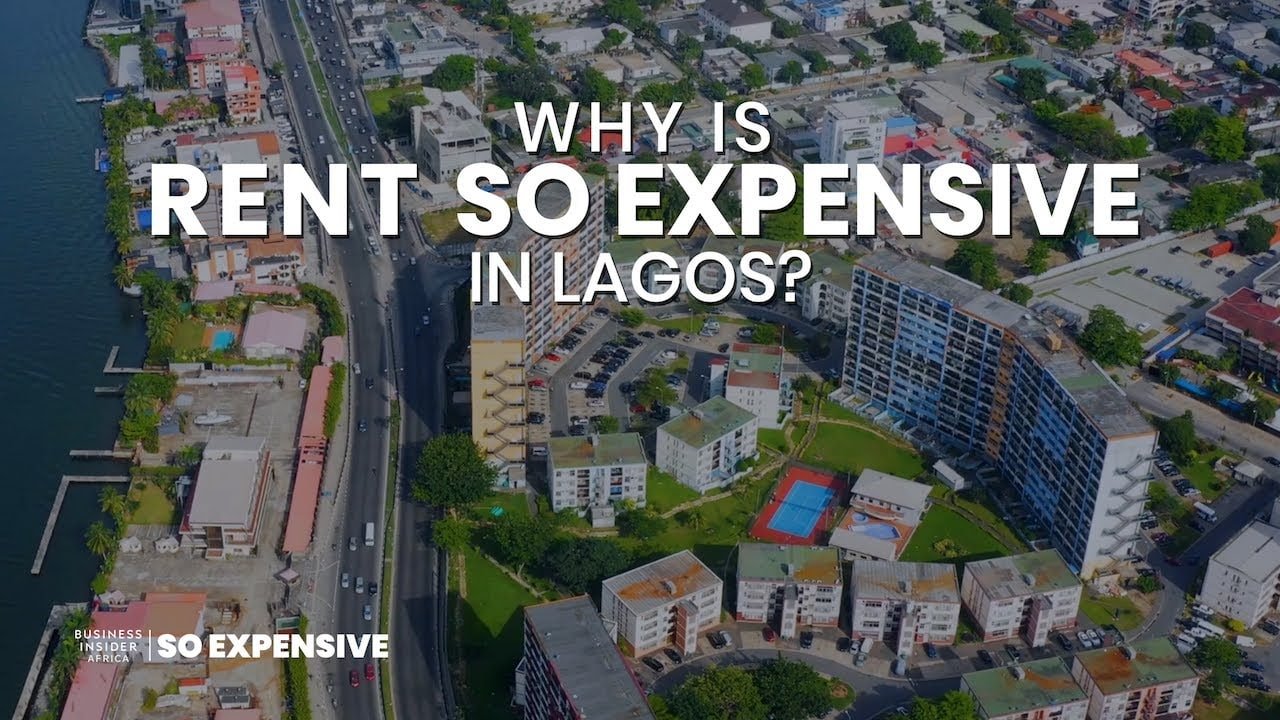
The developers and government officials who will respond to this will say that the volume of transactions in Lagos, the complexity of family land disputes, the historical absence of proper cadastral mapping across large parts of the state, makes direct comparison unfair. There is some truth in that. I am not pretending the problem has no context. But context does not explain eleven months and seventeen additional requirements for Engineer Festus. Context does not explain the gap between the fee on the government website and the total that clears your file. Context, in this case, is sometimes just a more sophisticated way of saying: this is how we prefer it.
The pushback that is beginning to happen is coming mostly from the developers and institutional investors whose capital is large enough that the inefficiency becomes undeniable on a spreadsheet. They are the ones with lawyers loud enough and relationships high enough to make noise in the right places. The individual landlord in Sangotedo or Badore with one property and a fixed salary is not pushing back. He is doing what Engineer Festus has learned to do: showing up, writing things in a small notebook, and paying what needs to be paid because the alternative is a property that exists in fact but not in law, which in Lagos is a fragile thing to bet your retirement on.
If you are buying property anywhere in Lagos right now, at any price point, the C of O question is not a box to check after the transaction. It is the transaction. What is the title? Who holds it? What is the processing status and what is the realistic timeline and realistic total cost to get it into your name? Ask those questions before you negotiate price, because a cheap property with a complicated title is not a bargain. It is a problem with a discount attached to it.
The stamp on that document is worth more than the building underneath it. Lagos has always known this. It is time more buyers did too.


Lukmon Isiaq is a Lagos-based property researcher and street-level writer who has spent years studying the Ajah corridor the way most people never bother: on foot, in compounds, and in conversation with landlords, tenants, caretakers, and estate agents who operate where the listings end and the real story begins.
He is not a property developer. He is not a real estate marketer. He is the person you call before you sign anything. The one who has personally walked flood-prone streets after October rain, argued with agents over undisclosed charges, and documented how the Lagos housing market actually works for ordinary Nigerians trying to make serious decisions with serious money.
His writing on Abraham Adesanya Estate Lekki Ajah covers the Ajah corridor, Ikota Villa, Ajao Estate, Ogudu GRA, and the wider Lekki property market with one consistent standard: the honest version, not the brochure version.
He understands the gap between what a listing promises and what a tenant discovers on their first rainy season.


