




Isimi Lagos Is Quietly Becoming the Most Valuable Land Bet in West Africa
I drove past the Isimi Lagos signage for the third time before I actually stopped. The first two times I had been on my way somewhere else, which is the usual excuse, but the truth is that something about the scale of the hoardings made me uneasy in a way I could not immediately name. They were too clean. Too confident. Out there on the Lekki-Epe Expressway, somewhere past the point where Ajah’s density starts thinning and the land opens up and the roadside sellers switch from phone accessories to firewood and live chickens, a sign that large and that assured tends to mean one of two things. Either someone has done something genuinely serious, or someone very much wants you to believe they have.
I stopped because a man named Rafiu, a land broker I have known for four years and who I trust more than most people in that business, called me and told me to go and look properly. He said whatever I thought I knew, I should go and look again.
So I went.
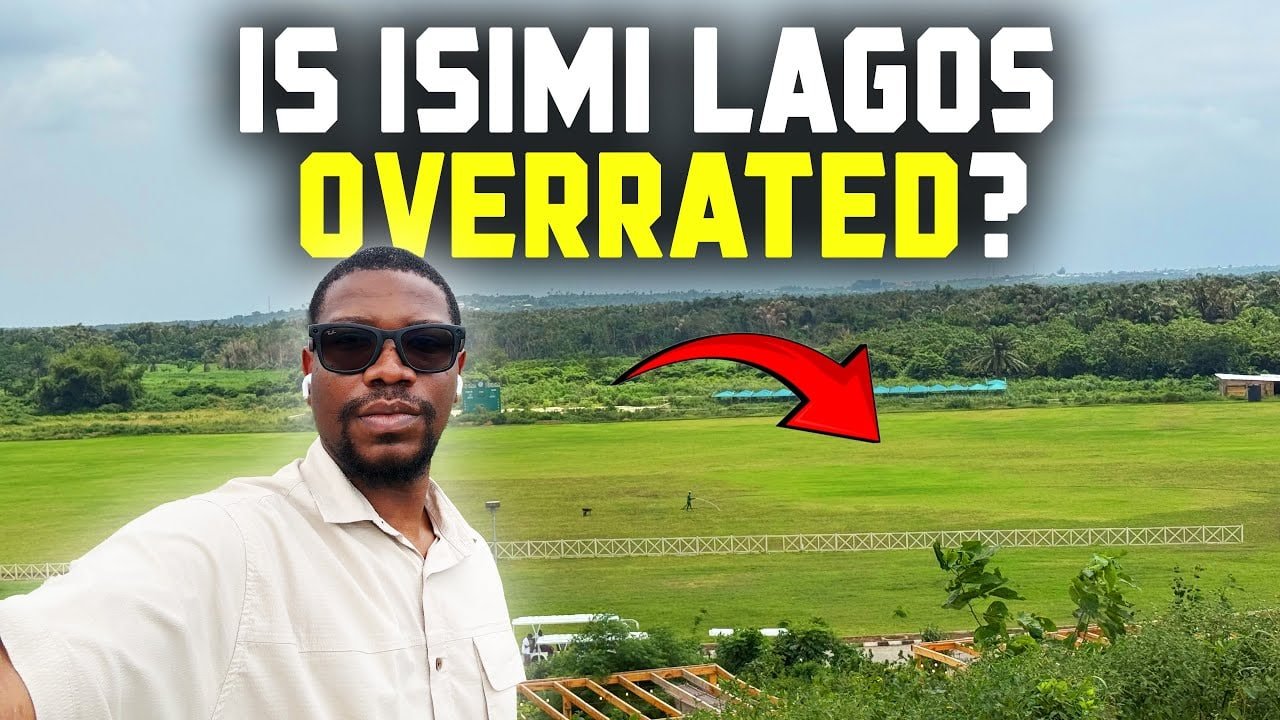
Isimi Lagos, for those who have not encountered it yet, sits along that corridor that the Lagos real estate industry spent the last decade and a half promising would become something, and which is now, in very specific pockets, actually becoming something. It is positioned as a mixed-use destination, resort, residential, commercial, the kind of development that in a different city would not require this much explanation but in Lagos requires you to suspend a very reasonable and very earned skepticism and look at the actual numbers.
Here is what I saw when I looked at the actual numbers. The land acquisition happened early enough, and at prices that, compared to what the Lekki Phase 1 and Chevron corridors were commanding even five years ago, represent the kind of entry point that does not stay available for long once the infrastructure conversation becomes real. The Lekki-Epe Expressway is no longer a promise. It is a functioning road. Imperfect, Lagos-imperfect, the kind of road that knows it is better than it used to be and wants you to acknowledge that, but functional. The Epe axis has international airport conversation attached to it now, and I am normally the first person to treat airport conversation with the suspicion it usually deserves in this country, but the Dangote Refinery is not conversation. It is operational. And its workforce, its supply chain, its executive layer, all of those people need somewhere to live that is not two hours inside the Lagos mainland.
The thing that shifted my thinking, and I did not expect this to be the thing, was the profile of the buyers I found when I started asking around. I spoke to three separate people who had taken plots at Isimi, not agents, actual purchasers, one of them a returnee from the UK who had been watching the corridor since 2019, one a business owner in Lekki who had sold a plot in Chevron and moved the proceeds further east, and one a civil servant who had pooled resources with two siblings and was extremely clear-eyed about the timeline involved. None of them were expecting short-term returns. All of them were betting on a corridor that is still pricing below where the fundamentals suggest it should be.

Now. I will say the thing that the Isimi marketing materials will never say.
The distance is real. From Abraham Adesanya roundabout, from the heart of what most Ajah residents consider their daily geography, Isimi is not next door. If you are someone whose life is organised around the Ajah-Lekki axis, around the school runs and the office commutes and the Saturday market noise and the generator drone that starts at six in the morning on your street behind the roundabout, then Isimi is a different calculation. It is a bet on a future version of this corridor, not the current one. The infrastructure that would make it seamless, the arterial roads, the consistent grid power, the commercial density that follows residential density once the numbers justify it, is still arriving. Some of it has arrived. Much of it has not.
The people making money from Isimi are the ones who understood this distinction and bought accordingly. They are not living there yet. They are not necessarily planning to live there at all. They are holding. They are watching the expressway improve and the refinery hum and the airport conversation slowly acquire the texture of seriousness, and they are patient in the way that land investment in Lagos demands you to be patient, which is a different kind of patience from anywhere else because the risks are also different from anywhere else.
The question is not whether Isimi is real. It is real. The question is whether your money can afford to wait for the corridor to catch up with the vision, because it has not caught up yet.
Buy only what you can afford to forget about for five years. If you will need that money in three, look elsewhere.


Lukmon Isiaq is a Lagos-based property researcher and street-level writer who has spent years studying the Ajah corridor the way most people never bother: on foot, in compounds, and in conversation with landlords, tenants, caretakers, and estate agents who operate where the listings end and the real story begins.
He is not a property developer. He is not a real estate marketer. He is the person you call before you sign anything. The one who has personally walked flood-prone streets after October rain, argued with agents over undisclosed charges, and documented how the Lagos housing market actually works for ordinary Nigerians trying to make serious decisions with serious money.
His writing on Abraham Adesanya Estate Lekki Ajah covers the Ajah corridor, Ikota Villa, Ajao Estate, Ogudu GRA, and the wider Lekki property market with one consistent standard: the honest version, not the brochure version.
He understands the gap between what a listing promises and what a tenant discovers on their first rainy season.


