

There is a development going up along the Lekki corridor, somewhere between Chevron and the second toll gate, that I have been watching for about eight months. I will not name it because the developer’s lawyer is faster than my landlord’s plumber, but you have seen the billboard. The render shows a glass tower catching sunset light in a way that Lagos sunset light does not actually fall. The units start at four hundred and eighty million naira. The sales brochure, which someone left in a car I was sitting in, describes the kitchen worktops with more tenderness than most fathers describe their children.
I picked up that brochure and I read it the same way I read all property marketing in this city. Looking for what is not there.
What is not there is any serious answer to the question of who is buying these apartments and with what. That question has been sitting in the middle of Lagos real estate conversation for two years now, getting louder, and the people with the most to gain from not answering it are doing an excellent job of changing the subject. The subject they prefer is the product itself: the infinity pools, the four-level underground parking, the concierge desk staffed by young people in uniforms that cost more than a month’s minimum wage. I have nothing against infinity pools. I am simply more interested in the water that fills them and where it came from.
Let me tell you what I have actually observed, not theorised, observed, from conversations on this corridor.
The super-luxury market in Lagos is not being driven by a new generation of legitimately wealthy Nigerians who have built transparent businesses and need somewhere elegant to live. Some of it is that. A fraction. The larger engine, the one that explains why a city where the majority of working adults cannot afford one year’s rent on a standard two-bedroom in Abraham Adesanya can simultaneously sustain a market for five-hundred-million-naira apartments, is the movement of money that cannot easily explain itself. Lagos has always had this layer. What is new is how aggressively it has been formalised, branded, and celebrated in the press as economic vitality.
The thing that shifted my thinking on this, the moment I stopped treating the luxury boom as simply a market segment above my coverage area, happened about fourteen months ago. I was speaking with a caretaker, a man named Rafiu, who manages a set of properties in the Abraham Adesanya axis. He told me, without particular emotion, that three of the high-end short-let apartments he knew of in the Lekki Phase 1 area had not had a single confirmed long-term tenant in over a year. Fully furnished. Professionally photographed. Perpetually empty, except for occasional weekend occupants whose names did not appear on any agreement. The owner is not looking for rent, Rafiu said. He said it the way you state a fact about weather.
I have heard versions of that sentence from six different people since then.
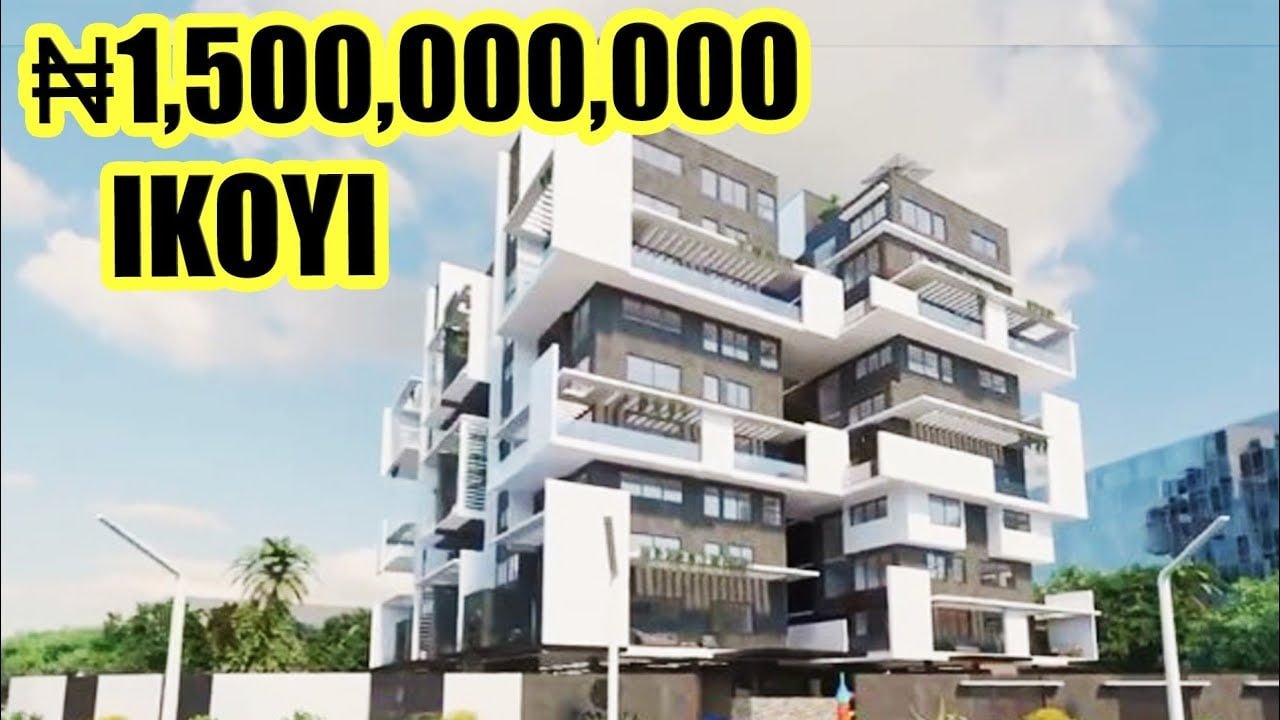
An apartment that is not looking for rent is not really an apartment. It is a storage facility with air conditioning. And when the product being stored is capital that needs to be converted into something with a title document and a Lagos address, then what the developer is really selling is not luxury living. It is a service. A very expensive, very tastefully rendered service that the brochure will never describe in those terms.
Here is what I find genuinely offensive about how this boom is being reported and celebrated. Every profile of every gleaming new development along this corridor is written as though it represents Lagos arriving somewhere. As though the existence of a five-hundred-million-naira apartment is evidence of a maturing economy and a growing elite class rather than, in many cases, evidence of an economy with a serious problem finding clean places to park dirty accumulation. Meanwhile, the same corridor that hosts these towers has roads that flood every rainy season and electricity supply that would embarrass a town of five thousand people. These two facts are not unrelated. They are the same story told from different floors.
I want to be precise about what I am and am not saying. I am not saying every buyer in this market is concealing something. I am saying that a market where pricing has decoupled this completely from income realities, in a city without a functioning mortgage system, in a country without serious beneficial ownership enforcement, deserves more scrutiny than it is receiving from the people paid to write about it.
The most honest thing I can tell you about the N500 million apartment is this: if you are a regular person looking at that market and wondering what it means for yours, it means that land values and development ambitions along this entire corridor are being calibrated to a buyer who has nothing in common with your financial life, and the pressure that creates flows downward without apology.
The building that faces the wrong direction in the render will not fix its orientation when it is completed. Neither will the market.

Lukmon Isiaq is a Lagos-based property researcher and street-level writer who has spent years studying the Ajah corridor the way most people never bother: on foot, in compounds, and in conversation with landlords, tenants, caretakers, and estate agents who operate where the listings end and the real story begins.
He is not a property developer. He is not a real estate marketer. He is the person you call before you sign anything. The one who has personally walked flood-prone streets after October rain, argued with agents over undisclosed charges, and documented how the Lagos housing market actually works for ordinary Nigerians trying to make serious decisions with serious money.
His writing on Abraham Adesanya Estate Lekki Ajah covers the Ajah corridor, Ikota Villa, Ajao Estate, Ogudu GRA, and the wider Lekki property market with one consistent standard: the honest version, not the brochure version.
He understands the gap between what a listing promises and what a tenant discovers on their first rainy season.
