

Ikota Villa Estate is one of the most flood-prone areas in Lekki, Lagos. Lands in Ikota Villa are dense and retain a lot of water. Flooding intensifies during the rainy season due to 5 documented causes, including blocked drainage channels, proximity to the Ikota River, and illegal encroachment on waterways.
For more context, read the previous guide: Ikota Villa Estate Distance to Palms Shopping Mall: Routes, Travel Time, and 3 Transport Options.

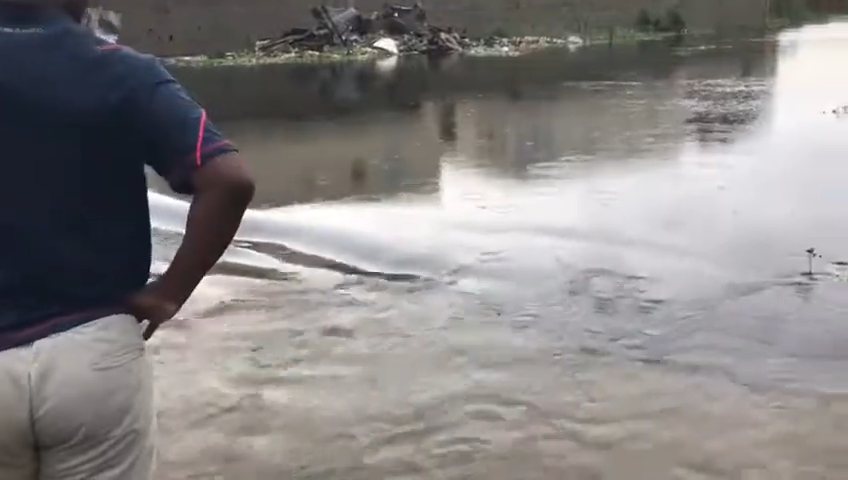
What Is the Flood Situation in Ikota Villa Estate?
The Ikota zone experienced significant flood events in both July 2024 and September 2025, with residents describing roads, homes, and businesses completely submerged. The documented cause is structural: illegal structures built on System 156 and 157 drainage channels – the designated stormwater discharge routes into the Ikota River and onward into the Lagos Lagoon – have severely reduced drainage capacity.
Where Is Ikota Villa Estate Located in Lagos?
Ikota Villa Estate is located along the Lekki-Epe Expressway, beside the Mega Chicken restaurant outlet, a short distance after Chevron Nig. Ltd. It takes approximately 20 minutes to drive to Victoria Island from the estate outside of rush hours. The estate falls within the Eti-Osa Local Government Area of Lagos State. Source: Google Maps route reference.
Why Does Ikota Villa Estate Flood?
There are 5 main causes of flooding in Ikota Villa Estate. These are blocked drainage channels, proximity to the Ikota River and canal, dense water-retaining land, illegal structures on waterways, and insufficient drainage infrastructure.
How Do Blocked Drainage Channels Cause Flooding in the Estate?
Residents blame recurring flooding on illegal structures built on canals and drainage channels, particularly System 156 and 157 drainage channels. Developers have blocked waterways, and the Lagos State Government has been accused of failing to enforce its own planning regulations.
How Does the Ikota River Contribute to Flooding in the Area?
Commissioner for the Environment, Tokunbo Wahab, warned that developments along the Ikota River banks have dangerously narrowed natural water channels, posing a threat to Lekki and the broader Island area of Lagos. “God forbid if anything happens on the Atlantic side, the Ikota River becomes the only natural channel to protect the entire Island. That path has now been compromised,” Wahab stated.
How Severe Is the Flooding in Ikota Villa Estate?
Land in some parts of Ikota Villa is naturally sloppy and always in wet condition. Even after minor rainfall, roads in those areas contain stagnant water. The available drainage channels are too shallow and always blocked, with little free flow due to lack of maintenance.
Which Parts of Ikota Villa Estate Flood the Most?
Flood in Ikota Villa can be attributed to the density of the land, which retains water, the lack of drainage channels, and its proximity to the canal. During the rainy season, most residents are left with no choice but to temporarily relocate until the rainy season is over.
Flood-affected zones within and adjacent to Ikota Villa Estate include:
- Westend Estate – located within Ikota Villa and shares identical flooding conditions
- Oral Estate II – along the Ikota River alignment
- Agungi Ajinran – waist-high flooding recorded in September 2025
- Megamound Estate – affected by the Ikota River corridor
What Recent Flood Events Affected Ikota Villa Estate?
On 4 July 2024, heavy rainfall lasting over 10 hours triggered flash floods in the Lekki area, inflicting severe damage to homes, businesses, roads, and landmarks. Roads were blocked for days as residents cleaned up and began repairing damaged buildings. Source: Google Maps route reference.
In September 2025, another major downpour left homes and roads completely submerged in Ikota and the Lekki axis. Floods swallowed streets, destroyed businesses, and forced families to scramble to salvage property. A resident confirmed water levels reached waist-high in neighboring streets, forcing residents to remain indoors for up to 3 days.
What Has the Lagos State Government Done About the Flooding?
The Lagos State Government commenced demolition of all marked structures in Ikota Estate following the expiration of quit notices. Property owners contravened drainage setback standard rules, leading to perennial flooding.
Enforcement teams from the Drainage Enforcement and Compliance Department removed contravening structures within Megamound Estate and Oral Estate along the Ikota River alignment to prevent perennial flooding. The state also issued stop-work and seal orders on illegal reclamation around Partibons Homes Estate and Bee-Forth Estate Phase II, off Orchid Road.
What Is the Lagos 24-Month Flood Control Plan?
Lagos State launched a 24-month flood control and wetland restoration plan integrating estate lakes, canals, and pumps into a Blue-Green Network that stores and gradually releases rainwater. The plan includes restoring canal rights-of-way, installing flap gates and pumps at tide-sensitive outfalls, and expanding drainage systems. Between 2023 and 2025, maintenance was carried out on 579 kilometres of secondary collectors and 309 kilometres of primary channels, while 218 new channels were awarded for construction. Source: Google Maps route reference.
Ikota Villa Estate Flood Situation Summary
The table below outlines the 5 main causes of flooding in Ikota Villa Estate, their impact, and the corresponding government response.
Cause | Impact | Government Response |
Blocked System 156 and 157 drainage channels | Stormwater cannot discharge into Ikota River | Demolition of encroaching structures |
Illegal reclamation narrowing Ikota River | Reduced river capacity during heavy rain | Stop-work orders issued; sheet piles mandated |
Dense, water-retaining land | Stagnant water after minor rainfall | No direct structural fix yet |
Shallow and poorly maintained drainage | Poor stormwater flow throughout estate | 579 km of secondary collectors maintained Source: Google Maps route reference. |
Proximity to canal and waterfront | Rapid inundation during floods | Blue-Green Network restoration plan underway |
What Can Residents Do to Manage Flooding in Ikota Villa Estate?
Residents in Ikota Villa Estate can take 4 practical steps to reduce flood impact:
- Raise ground floor levels above road grade to prevent water entry into compounds.
- Install sump pumps or water pumps to remove stagnant water after heavy rainfall.
- Report blocked drainage channels to the Lagos State Ministry of Environment and Water Resources.
- Avoid building extensions or structures over drainage channels within the compound.
Wahab noted that short-term water accumulation is normal during heavy rainfall in Lagos due to “lock-up”, where stormwater has not yet drained into natural water bodies like the lagoon or ocean, and residents should not panic when this occurs.
What Is the Long-Term Outlook for Flooding in Ikota Villa Estate?
The Lagos State Commissioner for Environment acknowledged that flooding cannot be completely eliminated in a coastal state like Lagos, bordered by the Atlantic Ocean, lagoons, and rivers. The government is committed to mitigating its impact through resilient infrastructure. Urban planners confirm that Lagos’ master plan prohibits construction on waterways, but enforcement has been weak and selective. Residents insist that until the government restores the area according to the original master plan, the flooding will not stop. The demolition of 39 structures in Ikota Estate in October 2025 marks the most significant enforcement action taken so far, but the systemic drainage problem across Ikota Villa Estate remains unresolved.
Lukmon Isiaq is a Lagos-based property researcher and street-level writer who has spent years studying the Ajah corridor the way most people never bother: on foot, in compounds, and in conversation with landlords, tenants, caretakers, and estate agents who operate where the listings end and the real story begins.
He is not a property developer. He is not a real estate marketer. He is the person you call before you sign anything. The one who has personally walked flood-prone streets after October rain, argued with agents over undisclosed charges, and documented how the Lagos housing market actually works for ordinary Nigerians trying to make serious decisions with serious money.
His writing on Abraham Adesanya Estate Lekki Ajah covers the Ajah corridor, Ikota Villa, Ajao Estate, Ogudu GRA, and the wider Lekki property market with one consistent standard: the honest version, not the brochure version.
He understands the gap between what a listing promises and what a tenant discovers on their first rainy season.


