
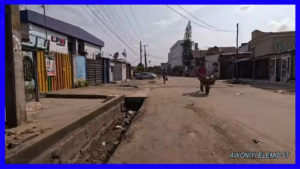
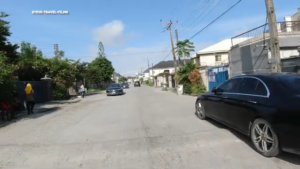




The letter was slipped under her door on a Friday evening, which is a time chosen deliberately in this city because it gives you the weekend to worry before you can do anything useful about it. Aunty Ngozi has lived in her flat in Abraham Adesanya for four years. She has never missed a service charge payment. She has the receipts, all of them, in a brown envelope she keeps in the same drawer as her tenancy agreement. The letter informed her that her 3.5 KVA generator, the one she bought after the estate’s central generator failed for the third time in a single month, was now in violation of the estate’s revised noise and emissions policy, and that she had fourteen days to remove it or face a fine.
She called me the following Monday. She was not shouting. That is always the more serious sign.
I want to tell you about estate management committees, because they have become one of the most consequential and least examined forces in residential life along this corridor, and because the people who are most affected by them are often the ones who understood least what they were agreeing to when they signed their tenancy documents. Which is to say, almost everyone.
When estates like the ones around Abraham Adesanya were being developed and populated, the management committee was a reasonable idea. You have a shared facility, a gate, a borehole, a compound generator, drainage infrastructure that requires maintenance. Residents contribute to a pool. Someone administers the pool. Reasonable. The problem is what happens to that structure over time, specifically when the committee acquires the confidence that comes from controlling access to basic services without any corresponding accountability to the people paying for those services.
What I have seen in this estate and in others along the Ajah and Lekki corridor is a steady expansion of what management committees consider their jurisdiction. It started, as these things always do, with genuinely communal concerns. Then it became about aesthetics. Then it became about noise. Then about visitors. Then about who can operate a business from their flat and who cannot. Then about satellite dishes. Then about the colour of curtains visible from the compound, which I am not inventing. One caretaker I spoke with near Jakande told me, without any apparent irony, that the committee in his estate had recently passed a resolution about the maximum size of doormats.
The thing that shifted my understanding of this was not any single policy. It was a conversation I had with a committee chairman, a retired civil servant, pleasant man, good shoes, who explained to me with complete sincerity that the residents of his estate could not be trusted to make decisions about their own compound without oversight. He said this while sitting on a committee that had appointed itself, had never been formally elected, and had been operating on the same internally drafted constitution for nine years without a single general meeting to review or ratify anything. He did not see a contradiction. That is the part I keep thinking about.


Here is what nobody writing property listings will tell you. When you rent or buy inside a managed estate in Lagos, you are not just entering into an agreement with your landlord. You are entering into a relationship with whatever committee exists, or will exist, or will reorganise itself, on that estate. That committee can levy you charges that were not in your original agreement. It can restrict how you use your flat in ways your landlord never mentioned. It can cut your access to shared facilities over a dispute that has nothing to do with your conduct. And in most cases, there is no formal appeals process, no independent arbitration, and no legal document that clearly defines the limits of their authority over you.
Property developers in this city have largely washed their hands of this problem. They build, they sell or let, they hand over a set of estate rules drafted by their own lawyers in their own interest, and they leave. The committee that forms in the vacuum is whoever has the time, the confidence, and the appetite for that kind of power. Sometimes that produces genuinely good management. I have seen it. More often it produces a small group of people who have discovered that controlling infrastructure is a form of authority that Lagos, with its long familiarity with unofficial power structures, is not particularly equipped to challenge.
Aunty Ngozi removed her generator. She did not have the energy for fourteen days of a fight she was not certain she could win while also going to work. The fine, she told me, was set at an amount that would hurt but not destroy. Which is, of course, exactly how you set a fine when you want compliance rather than resistance.
Before you commit to any estate with a management committee, ask to see their constitution, their meeting minutes from the last twelve months, and the specific legal basis on which they levy charges. If they cannot produce all three without hesitation, you are not moving into a managed community. You are moving into someone’s project.


Lukmon Isiaq is a Lagos-based property researcher and street-level writer who has spent years studying the Ajah corridor the way most people never bother: on foot, in compounds, and in conversation with landlords, tenants, caretakers, and estate agents who operate where the listings end and the real story begins.
He is not a property developer. He is not a real estate marketer. He is the person you call before you sign anything. The one who has personally walked flood-prone streets after October rain, argued with agents over undisclosed charges, and documented how the Lagos housing market actually works for ordinary Nigerians trying to make serious decisions with serious money.
His writing on Abraham Adesanya Estate Lekki Ajah covers the Ajah corridor, Ikota Villa, Ajao Estate, Ogudu GRA, and the wider Lekki property market with one consistent standard: the honest version, not the brochure version.
He understands the gap between what a listing promises and what a tenant discovers on their first rainy season.


