




I have seen that headline, or some version of it, at least fourteen times in the last eighteen months. Different websites, different logos, same energy. Sometimes it is ten neighbourhoods, sometimes it is seven, once it was twelve. The neighbourhoods shuffle around depending on who is writing the piece and what they are quietly trying to sell you, but a few names are always in there. Ibeju-Lekki. Epe. Sangotedo. Maybe Ajah itself, positioned as the next Lekki Phase 1 the way Lekki Phase 1 was once positioned as the next Victoria Island, a comparison that contains just enough truth to be dangerous.
I want to tell you about a man I will call Biodun, because that is close enough to his name and he asked me not to use the real one.
Biodun read one of those articles in early 2021. He was living in Ibadan at the time, working remotely for a company that had gone fully online during the pandemic, and he had money sitting in an account doing the kind of nothing that makes a man with ambition feel like he is falling behind. The article told him that a particular axis near the Epe corridor was about to explode in value because of a government infrastructure project and the general eastward movement of Lagos expansion, which is a real phenomenon, Lagos does expand eastward, that part is not a lie, the lie is in what they do not tell you around that truth. He bought a plot. Paid in full. Got his documents. Felt good about it for approximately eight months.
Then he came to Lagos to see the land.
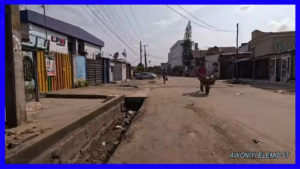
The road to it involved an okada for the last forty minutes because no car was going where he needed to go. The plot was real, I want to be clear, the documents were legitimate and the land existed in the physical world, but the infrastructure the article had described as imminent, the road project, the shopping development, the things that were supposed to make that land worth twice what he paid by 2024, none of it had moved. There was a billboard. There is always a billboard. The billboard showed a road that was not there and a bridge that had not started and a vision of what someone wanted you to believe was coming. The actual ground was the same bush it had always been, and the people who actually lived in the nearest community looked at him with the patient sympathy of people who have watched this particular type of visitor arrive and recalibrate before.
Biodun’s land is not worthless. I want to be fair. But it is not worth twice what he paid, and 2028 is not going to fix that, and nobody who wrote that article has any liability for the gap between what they promised and what exists on the ground.


Here is the thing I have come to believe about these neighbourhood prediction pieces, and I am aware that some developers and marketing agencies will find this inconvenient. These articles are not journalism. They are not research. They are distribution mechanisms for someone’s inventory. A developer or a land-banking company acquires plots in an area, then seeds content across real estate blogs and YouTube channels and WhatsApp groups that talks up that area, and the writers of that content are either paid directly or they are simply not asking the question they should be asking, which is: who benefits from me publishing this, and have I been to the place I am writing about, and have I spoken with anyone who actually lives there about what living there is actually like.
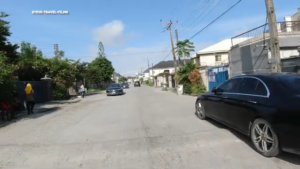
The Ajah corridor is real. The growth along the Lekki-Epe Expressway is real. Abraham Adesanya Estate and the roads immediately around it have absorbed a population that has genuinely changed the character of this axis in ten years. I have walked enough of it to know where the growth is structural and where it is speculative, and the difference matters enormously to someone making a decision with savings they cannot afford to lose.
Structural growth means schools, markets, churches, businesses, people who have decided to live there permanently. That kind of growth is slow and it is visible on the ground. Speculative growth means a billboard and a prediction and someone else’s investment thesis dressed up as your opportunity.
When you read a list of neighbourhoods that will double in value by a specific year, find out who wrote it, find out what they are selling, and then go to the neighbourhood and talk to someone who is not trying to sell you anything. The groundnut seller near the bus stop will tell you more about where that area is actually going than any article with a confident headline and no byline you can hold accountable.


Lukmon Isiaq is a Lagos-based property researcher and street-level writer who has spent years studying the Ajah corridor the way most people never bother: on foot, in compounds, and in conversation with landlords, tenants, caretakers, and estate agents who operate where the listings end and the real story begins.
He is not a property developer. He is not a real estate marketer. He is the person you call before you sign anything. The one who has personally walked flood-prone streets after October rain, argued with agents over undisclosed charges, and documented how the Lagos housing market actually works for ordinary Nigerians trying to make serious decisions with serious money.
His writing on Abraham Adesanya Estate Lekki Ajah covers the Ajah corridor, Ikota Villa, Ajao Estate, Ogudu GRA, and the wider Lekki property market with one consistent standard: the honest version, not the brochure version.
He understands the gap between what a listing promises and what a tenant discovers on their first rainy season.


