
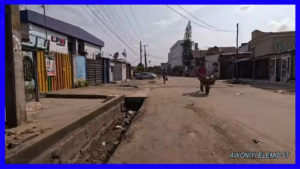
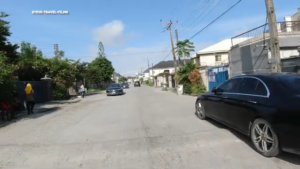




The gate man at one of the newer estates off Abraham Adesanya told me something I have been thinking about for months. He said: “I don’t know half the people I’m opening this gate for anymore.” He said it the way you say something that has been sitting on your chest for a while, not as a complaint exactly, more like a confession. He had been on that post for four years. He used to know every car, every face, every child who ran past him on their way to the school bus. Now, on any given Friday evening, he was waving in strangers pulling Keke Napep with luggage, people who had booked a flat on Instagram and were coming to spend the weekend in what he used to think of as his community.
That conversation was the beginning of this piece. Everything else I found just confirmed what he already knew.
Short-let apartments, for those who have somehow missed this particular Lagos development, are residential flats that owners rent out per night or per weekend through platforms and WhatsApp broadcasts, functioning essentially as hotel rooms inside gated residential estates. The economics make sense if you are the owner. A flat in this corridor that would fetch three hundred and fifty thousand naira annually as a traditional tenancy can earn that same amount in a few weekends if marketed correctly to the Abuja crowd, the diaspora visitor, the corporate traveler who wants a kitchen and a generator. The math is not complicated and I am not here to pretend that landlords do not have the right to maximize their returns.
But the people living permanently in those estates are paying a price that nobody factored into that math.
I spoke with a woman, a civil servant, who has lived in her estate near Ogombo Road for six years. Quiet woman, the type who knows all her neighbours by first name and keeps a small garden by her front door. Last December, a flat two doors from hers was converted by its owner into a short-let. Within three weekends, she had filed two noise complaints that went nowhere, discovered that the estate’s shared water tank had been drained twice by a group of guests who apparently ran it for a private party, and watched a man she had never seen before climb her own fence at two in the morning because he had lost his key and confused the flats. He was a guest. He was harmless. But she did not know that when she heard the sound.
Here is the thing about gated communities in Ajah that people who have never lived in one sometimes miss. The gate is not just physical security. It is a social contract. The people inside that gate have agreed, by choosing to live there, to a certain level of mutual accountability. You know who your neighbour is. You notice when something is wrong. You call each other when there is a suspicious car parked outside. The moment you begin rotating strangers through residential flats every three days, that contract breaks down completely and you are left with the illusion of security without any of its substance.


I will say plainly what some estate developers and property investment coaches on Lagos Instagram will find irritating: the push to convert residential units into short-let operations is being driven by people who do not live in those estates and will not live with the consequences. The developer has sold and moved on. The investment coach is collecting consultation fees in Ikoyi. The landlord is monitoring Airbnb notifications from Abuja. And the woman with the garden is filing noise complaints that the estate management, which is underfunded and underequipped and probably has its own conflicts of interest with the short-let owners, will never meaningfully enforce.
What surprised me, genuinely changed my thinking on this issue, was when I started talking to the residents who had begun organizing. I had expected the usual Lagos passivity, the muttering and the endurance that this city specializes in. What I found instead were WhatsApp groups, petition letters to estate management committees, and in one case a residents’ association that had successfully lobbied for a bylaw restricting short-let operations to a dedicated block within the estate. It had taken them fourteen months and two threatened legal actions. But they had done it.
That matters. It tells you that this is not a problem without a solution. It is a problem without sufficient pressure from the people who actually bear the cost of it.
If you are currently living in a gated estate in this corridor and you have noticed an uptick in unfamiliar faces, in cars without regular stickers, in the general loosening of the social fabric that made you choose that estate in the first place, the most useful thing you can do is not complain privately. Find out who sits on your estate management committee, attend the meeting, and ask specifically what the current policy is on short-let conversions.
If there is no policy, you have your answer about how seriously they are taking it, and you have your work cut out.


Lukmon Isiaq is a Lagos-based property researcher and street-level writer who has spent years studying the Ajah corridor the way most people never bother: on foot, in compounds, and in conversation with landlords, tenants, caretakers, and estate agents who operate where the listings end and the real story begins.
He is not a property developer. He is not a real estate marketer. He is the person you call before you sign anything. The one who has personally walked flood-prone streets after October rain, argued with agents over undisclosed charges, and documented how the Lagos housing market actually works for ordinary Nigerians trying to make serious decisions with serious money.
His writing on Abraham Adesanya Estate Lekki Ajah covers the Ajah corridor, Ikota Villa, Ajao Estate, Ogudu GRA, and the wider Lekki property market with one consistent standard: the honest version, not the brochure version.
He understands the gap between what a listing promises and what a tenant discovers on their first rainy season.


