




The Story Everyone Is Telling, and the Part Nobody Mentions
Her name is Folake, and I have now heard her story from four different people, which is how you know it has become a parable. The version I heard first was from an agent in a small office near the Ajah roundabout, the kind of office where the air conditioner is doing its best and the property photos are printed and laminated and stuck to the wall with yellowing tape. He told it the way people tell stories that are supposed to close a sale. She sold her car. She borrowed from family. She bought half a plot in Ibeju-Lekki for three and a half million naira, somewhere near the corridor that feeds toward the Dangote refinery axis, and five years later a valuation came back at thirty-five million. Ten times her money. He paused after he said it, the pause that is designed to let you imagine yourself as Folake.
I did not imagine myself as Folake. I asked him how many people he knew who had bought in the same area around the same time and were sitting on equivalent returns. He smiled the smile of a man who was not going to answer that question directly and offered me a bottle of cold water instead.
Here is what I know, from spending real time on that Ibeju-Lekki corridor, talking to people who are not in the business of selling you anything. Folake’s story is true. It is also not representative. It is the outcome that happened for the people who bought at the right location, with clean title, before the refinery announcement fully priced into the land market, and who had enough financial cushion that they did not need to sell during the years when the land was worth nothing except on paper. That combination of factors, right location, clean documentation, correct timing, and the financial patience to hold, is not something the parable version of the story mentions. The parable version makes it sound like the main variable was courage.
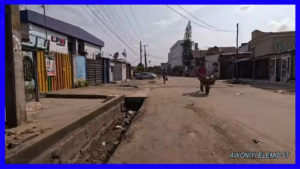
What changed my thinking about this was a morning I spent walking through a section of Ibeju-Lekki with a man who had bought two plots in 2019 on the advice of a friend who had done well there. He paid a combined four million naira. He has since discovered that one of the plots has a boundary dispute with a family that claims the land was sold to him without their consent, and the second plot, while undisputed, sits in an area where the access road was graded once for a promotional video and has not been touched since. His land exists. His title, which he paid for and received, is a registered survey. But the land is not accessible by vehicle in rainy season, there is no infrastructure within a kilometre that would support building, and every valuation he has received has been a verbal estimate from an agent with no comparable sales to reference. Nobody has made him an actual cash offer at anything close to what the verbal valuations suggest.


This is the Ibeju-Lekki that does not make it into the Instagram posts. Not every story ends at thirty-five million naira. Some of them end at a plot of land that has appreciated on paper but cannot be sold at that paper price because the buyer who would pay it does not yet exist, or the infrastructure that would justify it has not arrived and may not arrive on any timeline the original purchaser can afford to wait for.
I am not saying the Ibeju-Lekki land play is wrong. Some of it is very right, for the right buyer, with the right documentation, at the right location, with the financial position to wait years without needing a return. I am saying that the version of the story being circulated in agent offices and WhatsApp investment groups and YouTube videos has been edited to remove all of those conditions, because the conditions make it complicated and complicated things are harder to sell.
The developers and agents who are using Folake’s story right now, and they are using it, are not lying exactly. They are selecting. They are showing you the exit without showing you all the entrances that did not lead there.
If you are considering Ibeju-Lekki land because of a story you have heard, the only question that matters before you commit any money is this: can you get a registered survey, a deed of assignment, and a physical inspection with a licensed surveyor present, all before payment? Not after. Not in instalments as the transaction progresses. Before. If the answer is no, or not yet, or the agent becomes vague when you press, then the land that made someone else ten times richer is not going to do the same thing for you. It is just going to be expensive bush that you own on paper and cannot sell. Folake did well. Some people do. Ask to meet the ones who did not.


Lukmon Isiaq is a Lagos-based property researcher and street-level writer who has spent years studying the Ajah corridor the way most people never bother: on foot, in compounds, and in conversation with landlords, tenants, caretakers, and estate agents who operate where the listings end and the real story begins.
He is not a property developer. He is not a real estate marketer. He is the person you call before you sign anything. The one who has personally walked flood-prone streets after October rain, argued with agents over undisclosed charges, and documented how the Lagos housing market actually works for ordinary Nigerians trying to make serious decisions with serious money.
His writing on Abraham Adesanya Estate Lekki Ajah covers the Ajah corridor, Ikota Villa, Ajao Estate, Ogudu GRA, and the wider Lekki property market with one consistent standard: the honest version, not the brochure version.
He understands the gap between what a listing promises and what a tenant discovers on their first rainy season.


