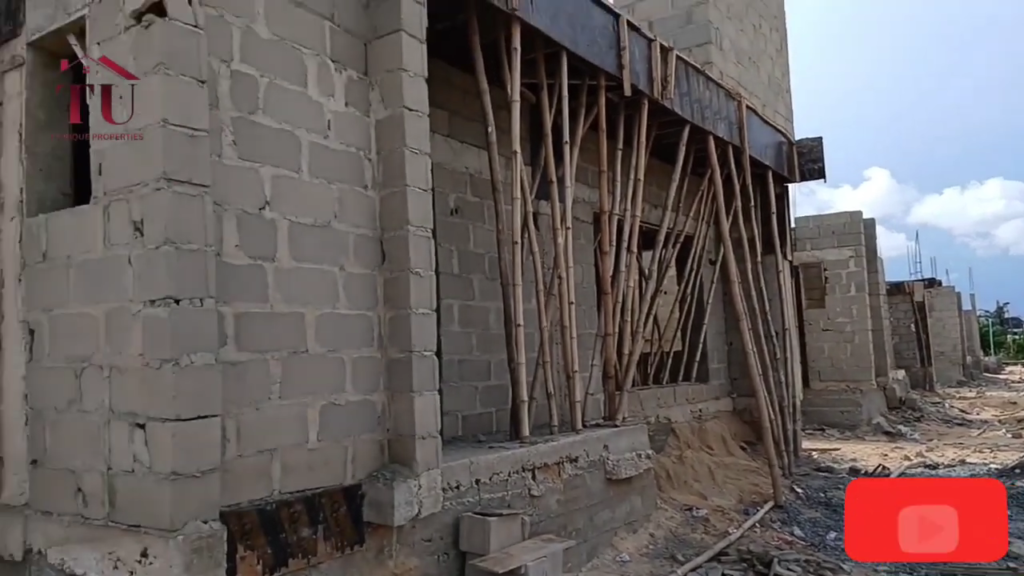
About Abraham Adesanya Estate
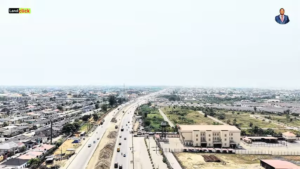
The way Abraham Adesanya Estate has expanded over the years is subtly telling; it’s not with the ostentatious fanfare of gated luxury developments in Victoria Island or the gilded towers creeping up along the Lekki Phase 1 corridor, but rather with the kind of tenacious, modest momentum that usually outlasts everything else. This housing complex, which is tucked away off the Lekki-Epe Expressway in Ajah, has become one of Lagos’ most talked-about residential addresses, and not just because of its infrastructure. It’s the atmosphere of the location. The feeling that something genuine is taking place here.
The date of the estate’s commissioning, January 15, 2001, has special meaning. The opening was overseen by Bola Ahmed Tinubu, the governor of Lagos State at the time. Looking back, it’s easy to picture Abraham Adesanya Estate Ajah as one of several subdued urban experiments being conducted on the outskirts of Lagos around the beginning of the new millennium. At the time, Ajah was far from the city core. The city seems to have arrived to greet it now.
Location | Ajah, off Lekki-Epe Expressway, Lagos State, Nigeria |
Also known as | Abraham Adesanya Estate Lekki Ajah; Abraham Adesanya Housing Estate Lagos |
Year Commissioned | January 15, 2001 |
Commissioned by | Bola Ahmed Tinubu (then Governor of Lagos State) |
Ownership | Lagos State Government (leased to occupants) |
Estate Type | Middle-class residential & commercial |
New Units Inaugurated | 233 housing units – November 2025 (by Governor Sanwo-Olu) |
Avg. Property Price | ₦130,000,000 (new apartments from ₦72M – ₦78M) |
Key Features | Security, business centers, ~22hrs electricity, rapid infrastructure growth |
Reference |
The Lagos State administration owns the property where the estate is located, and properties are leased to tenants. This arrangement has periodically caused conflicts, most notably in April 2019 when rumors of demolition spread throughout the community and the state administration was forced to publicly deny them. A few locals were undoubtedly shaken by that incident, which brought up the awkward question of how secure tenure is when someone else owns the land beneath your house. However, the estate persisted, the community held, and property values kept rising. Even as they remain, long-term inhabitants seem to discreetly consider whether that specific cloud is completely gone.
The first thing you notice when you stroll through Abraham Adesanya Estate on a regular weekday morning is how normal it feels, in the best possible way. There are shopping malls, schools, houses of worship, business facilities, and groups of apartments that appear well-maintained and functional. The estate’s internal roads are passable. In residential-only communities, where things might get eerily quiet by mid-afternoon, there’s a buzz of commerce that’s not usually there. People are present here.
According to reports, electricity is accessible for about 22 hours a day, which is almost unremarkable by Lagos standards. That assertion alone accounts for a substantial amount of the estate’s attractiveness if it is constantly supported, as several voices appear to indicate it is most of the time. A neighborhood that has figured out a somewhat reliable supply would draw residents who are serious about running houses and small businesses without the continual friction of generator expenditures. In Nigeria, power stability is never something to take for granted. This was even mentioned in a September 2025 TikTok review along with the estate’s only known flaw, which is flooding during heavy rains, but it seems to drain in about half an hour. Depending on how you feel about wet feet, that could be comforting or worrisome.
Abraham Adesanya Estate Lekki Ajah’s profile has risen to more ambitious heights due to the more recent improvements both inside and outside the estate. Regardless of its political timing, Governor Babajide Sanwo-Olu’s November 2025 inauguration of 233 freshly constructed housing units on the property gave an already active market a noticeable boost. The prices of new two-bedroom apartments ranged from ₦72 million without solar installation to ₦78 million with it, placing them firmly in the middle-class range. They are ambitious enough to signal quality and affordable enough to draw in young professionals who have been forced out of closer-in neighborhoods due to rising costs. The average price of homes for sale at Abraham Adesanya Estate, Ajah, has been around ₦130 million, indicating that the secondary market has reacted to the demand with typical Lagos zeal.
People might be underestimating the extent to which Abraham Adesanya Estate’s location, rather than its structures, shapes its identity. It benefits from a corridor that has been changing for more than ten years, bringing hospitals, supermarkets, tech companies, and logistical hubs toward its boundaries in a gradual but noticeable gravitational pull. It is located along the Lekki-Epe Expressway. Ajah is no longer a far-off suburb. People don’t just accept this address; they pick it consciously. That distinction is important.
The original plan for the estate, which called for a middle-class community supported by the government to provide safety and a semblance of order in a city that might appear chaotic from the outside, seems to have held up better than its designers could have anticipated. Over time, neglect, unofficial changes, or sheer population pressure have caused many Nigerian government housing complexes to lose their unique character. Abraham Adesanya Housing Estate Lagos has expanded in ways that feel natural while retaining parts of its original goal, perhaps imperfectly but clearly. For example, it is unlikely that any initial plan included business districts next to residential units. However, it fits.
Is it pleasant to reside at Abraham Adesanya Estate? It really is a personal calculation. It checks a lot of boxes for someone who appreciates community density, affordable power, closeness to Ajah’s larger commercial ecosystem, and somewhat reliable infrastructure by Lagos standards. The location within the estate appears to have a greater impact on the flooding issue than the estate as a whole, thus it is worthwhile to inquire about it. Before making a commitment, it is important to comprehend the leasehold ownership concept. Additionally, costs have been steadily rising, so discussing purchases now is different from what it would have been five years ago.
Without much discussion, the estate does provide evidence that intentional planning in Lagos may withstand touch with reality. Not quite. Not without difficulties. However, it’s good enough to keep people choosing it, which is a big deal in a city this size and complexity.
Prince and Princess Estate Abuja Amenities: 8 Key Features Every Prospective Resident Should Know
Prince and Princess Estate, Abuja Investment: ROI, Property Appreciation, and 4 Reasons Diaspora Buyers Are Buying In
Prince and Princess Estate Abuja: Housing Types, Districts, Prices, and Amenities in Kaura Games Village
Prince and Princess Estate Gudu Abuja: 3-Bedroom Bungalows, Prices, and Properties in Duboyi and Gaduwa
Houses for Sale in Prince and Princess Estate Abuja: 5 to 8-Bedroom Duplexes, Smart Homes, and Off-Plan Options
Prince and Princess Estate Abuja vs Gaduwa Estate: Location, Prices, and 4-Estate Comparison
Houses for Rent in Prince and Princess Estate Abuja: Prices, Types, and 2026 Rental Guide
Shortlet in Prince and Princess Estate Abuja: Prices, Types, and 6 Key Facts
Land for Sale Near Prince and Princess Estate Abuja: Citi-Golf Resort Sub-Plots and 5 Kaura District Options in 2026
Cowrie Creek Estate Lekki Waterfront: Creek View and Lagoon View Homes in Ikate Lagos
Living in Abraham Adesanya Estate Lagos: what to expect in 2026
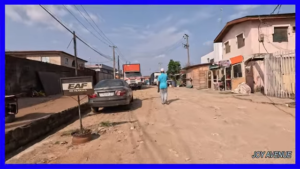
When you first arrive at Abraham Adesanya Estate, there’s something about it that usually sticks with you. The roadways seem broader than they should. The estate has a tranquility that other Ajah communities just lack because of the trees that were intentionally planted along the sides of the streets. When the Lagos State Government built the estate in the late 1990s, it’s possible that this is precisely what they had in mind: a planned residential community on the Lekki-Epe corridor that would age peacefully and without the anarchy that engulfed so many other estates farther inland.
| Information | Details |
|---|---|
| Full Name | Abraham Adesanya Housing Estate |
| Location | Ajah, Lekki, Lagos State, Nigeria |
| Local Government Area | Eti-Osa LGA |
| Named After | Chief Abraham Adesanya – Yoruba political leader and elder statesman |
| Year Established | Approximately late 1990s – early 2000s |
| Estate Type | Government-planned residential community |
| Phases | Multiple phases with extensions |
| Average Annual Rent | ₦1,000,000 – ₦7,000,000 |
| Average Sale Price | ₦25,000,000 – ₦250,000,000+ |
| Postal Code | 101233 |
| Nearby Landmarks | Ajah Market, VGC, Sangotedo, Lekki-Epe Expressway |
| Reference | Nigeria Property Centre |
The estate is located in Ajah, in Lagos State’s Eti-Osa Local Government Area, on a plot of land that many Lagosians long thought was too remote from civilization. The expressway then got better. Then the malls arrived. The hospitals and schools came next. Abruptly, Abraham Adesanya Estate found itself in one of Nigeria’s most steadily growing real estate corridors, with a government-surveyed plan that nearby newer constructions could only envy.
The housing estate bears a certain weight because it is named after Chief Abraham Adesanya, a well-known Yoruba elder statesman and political figure whose influence molded Lagos politics through the 1990s and beyond. It’s more than just an address. Many Lagos families who purchased homes here during the initial allocation period saw it as a form of stability that has only gotten harder to come by as the surrounding metropolis has grown more expensive and noisy. The older bungalows that coexist with the more recent duplexes, the compound walls that have been extended and re-tiled over the years, and the quiet pride of the locals who have witnessed the Ajah axis change around them are all examples of how this history is woven into the physical fabric of the area.
Walk through the estate today and you see that mix of old and new existing side by side. Some of the original buildings, such as satellite dishes, elevated perimeter walls, tiled facades, and other tiny visual indicators of upward mobility in Lagos, have undergone renovations that have rendered them nearly unrecognizable. Others wear their age honestly, standing mostly unaltered. It’s important to comprehend the estate’s internal diversity before deciding whether to buy or rent here in 2026.
Compared to five years ago, the debate about renting has changed. The least expensive properties, which are self-contained and one-bedroom apartments, start at about ₦1,000,000 annually, which seems reasonable until you factor in agency fees, caution deposits, and legal fees. Within guarded compounds, two-bedroom apartments usually cost between ₦3,000,000 and ₦4,000,000 per year. At ₦5,000,000 or more, a recently remodeled three-bedroom self-compound – the type that young professional families frequently seek – is listed. According to recent data from PropertyPro Nigeria, average rental costs throughout the estate are around ₦6,000,000 annually, with four-bedroom properties pushing toward ₦7,000,000 and more. Not too long ago, that number would have appeared ambitious.
The estate’s close proximity to Sangotedo, Victoria Garden City, Ajah Market, and the growing Lekki-Epe corridor seems to have done what proximity typically does in Lagos: it has raised prices and strengthened the argument for purchasing rather than renting for those with access to the capital.
The market in 2026 can be broadly divided into four pricing brackets for consumers. Older two-bedroom bungalows that need to be renovated start at about ₦25,000,000. Three-bedroom bungalows range from ₦40,000,000 to ₦70,000,000 depending on finishing and location within the estate. The price range for semi-detached duplexes is between ₦80,000,000 and ₦130,000,000. For luxury buildings, detached duplexes start at ₦150,000,000 and go far over ₦200,000,000. Premiums for properties on larger plots or those nearer the main gate are determined by demand, and they have been rising.
Despite the numbers, it’s difficult to ignore how many buyers are still relocating here. According to market data monitored by Nigerian real estate companies, the Lekki-Epe axis saw an increase in property values of more than 30% between 2019 and 2024. It’s highly likely that investors who purchased the mansion five or six years ago are content with their current situation. It’s actually unknown if that rate of appreciation will continue; Lagos real estate has previously shocked people in both directions.
The planned layout, which most Ajah communities were never given, is what truly makes the estate appealing beyond the pricing charts. Plots surveyed by the government. Defined structures for roads. Drainage networks. A particular order that persists despite the surrounding environment being busier and more crowded. Every day, that foundation is useful in a city where infrastructure frequently falls behind demand in ways that seem almost intentional.
Is it a pleasant location to live? With the qualities that come with living in Lagos, the majority of locals respond “yes” when asked directly. In certain areas of the estate, the power supply is erratic. For anyone traveling to Lagos Island, traffic on the Lekki-Epe Expressway during rush hour continues to be a real burden. However, the estate itself has a neighborhood aspect that is becoming harder to locate in more recent constructions where communities are formed more slowly than concrete.
Careful consideration should be given to the legal aspect. Not all of these properties have a Certificate of Occupancy. Some rely on the governor’s approval or the deed of assignment as their main source of paperwork. Compared to those who rely on unofficial introductions, buyers who engage with registered agents who are experienced with the Ajah real estate market typically handle this more responsibly. One of the few clouds over an otherwise solid investment case is title disputes, which are still a real risk.
There’s a sense that this estate may still be in its most valuable years as a market when you look at it from the outside and read the direction of the corridor it sits in. The Lekki axis continues to expand. Institutions continue to shift eastward. Abraham Adesanya Estate is situated in the center of everything, neither too far away to feel excluded nor too close to the highway to feel uneasy. In terms of Lagos real estate, that position typically ages very well. Patience has historically paid off here, whether you’re buying to hold or renting to gain a foothold.
Abraham Adesanya Estate vs Lekki Phase 1: which is better to live in
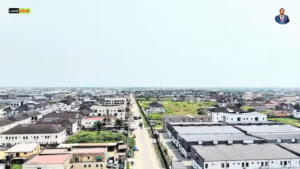
Lagos ceases to feel like Lagos at one point while traveling toward Ajah on the Lekki-Epe Expressway. There is a little decrease in traffic. The road opens. The buildings sit lower, the compounds become broader, and the roar of the city – always present, always pushing – begins, gradually, to retreat. That’s when you begin to see why Abraham Adesanya Estate has emerged over the past few years as one of the most truly discussed real estate choices in this city – quietly and without much publicity.
| Feature | Abraham Adesanya Estate | Lekki Phase 1 |
|---|---|---|
| Location | Ajah, Eti-Osa LGA, Lagos State | Lekki Peninsula, Eti-Osa LGA, Lagos State |
| Estate Type | Residential, family-oriented | Mixed residential and commercial |
| Annual Rent (3-bed flat) | ₦800,000 – ₦2,000,000 | ₦3,000,000 – ₦8,000,000 |
| Property Sale Price (3-bed) | ₦15,000,000 – ₦50,000,000 | ₦80,000,000 – ₦250,000,000+ |
| Infrastructure Status | Developing, improving | Highly developed |
| Community Character | Tranquil, spacious, family-focused | Upscale, vibrant, commercially dense |
| Distance to Victoria Island | 45 to 60 minutes by road | 20 to 30 minutes by road |
| Reference | Nigeria Property Centre | www.nigeriapropertycentre.com |
Lekki Phase 1 is at the other extreme of that argument. The point is that, in many respects, it is everything Abraham Adesanya is not. Within a short drive, Victoria Island, money, restaurants, and the unique energy that many Lagos professionals seem to require are all nearby. The decision that makes sense at a dinner gathering is Lekki Phase 1. It takes a little more time to discuss Abraham Adesanya Estate, and more individuals are prepared to do so these days.
The fact that neither response is clearly right is what gives this contrast a feeling of vitality rather than certainty. The best option is almost entirely determined by what a person truly values in a house, and in Lagos, those values are rarely as straightforward as they seem on a comparison table.
Years of closeness and accumulation let Lekki Phase 1 establish its name. It drew professionals, bankers, and foreigners due to its proximity to Ikoyi and Victoria Island. Eventually, the boutiques, brunch spots, and upscale gyms that cater to that type of money followed. Tables outside cafes, cars double-parked in front of salons, and a general low-frequency hum that suggests business is always going on nearby give Lekki Phase 1 a distinct feel on a Saturday morning. It is colorful in a way that some people find truly exciting, while others find it subtly draining after a few years.
Lekki Phase 1’s premium positioning is reflected in its infrastructure. By Lagos standards, drainage is reasonably functioning, roads are generally well-maintained, and inhabitants rarely have to go far for everyday necessities due to the commercial density. However, there is a real cost associated with that convenience, one that has increased with each year. Depending on the street and building quality, rental fees for a three-bedroom apartment can easily surpass ₦8 million per year, starting at about ₦3 million. Purchasing a separate home costs significantly more than ₦200 million. The proximity probably justifies the price for wealthy individuals whose workplaces are located on the island. It begins to feel like paying for a postcode to everyone else.
The tale of Abraham Adesanya Estate is more subdued. Situated off the Lekki-Epe Expressway in Ajah, it was long considered one of the Lagos locations that people disregarded as being too far away. There has been a noticeable change in this mindset, not only among investors searching for the next affordable axis but also among families and professionals who are becoming less convinced that being close to Victoria Island justifies the price Lekki Phase 1 is currently charging.
After living in a densely populated area for a sufficient amount of time, the physical experience of Abraham Adesanya Estate changes in significant ways. Compounds are bigger. Instead of the token patches of grass that show up in between buildings in some Phase 1 developments, properties frequently have real gardens. It is reasonable for a family to let their kids play outside. Until you have spent years sharing every outdoor area with neighbors or vehicles, that detail may seem insignificant. The annual rent for a three-bedroom apartment in Abraham Adesanya ranges from ₦800,000 to ₦2 million. If you can locate one, the cost of a duplex with a suitable compound is much lower than what the identical setup would need in Phase 1.
Of course, there’s the commute. With optimism regarding infrastructural timetables, Abraham Adesanya’s distance from the island cannot be dismissed. The trip from Ajah to Victoria Island can take up to an hour at rush hour. Although “eventually” is doing a lot of work in that statement, ongoing initiatives along the Lekki-Epe corridor, such as the development of coastal highways, could eventually alter that equation in important ways. For the time being, island inhabitants who work must be truthful about the time and emotional expenses of daily commuting five days a week for years.
It’s also important to recognize that, despite improvements, Abraham Adesanya Estate’s infrastructure still falls short of Phase 1 requirements. Each street has a different set of road conditions. Longer trips from Ajah are necessary to obtain some services that Phase 1 residents take for granted, such as multinational supermarkets, established shops, and some medical institutions. The estate is undoubtedly still growing, but it is growing in a way that feels real rather than fake.
The investment trajectory is what currently sharpens the comparison. Abraham Adesanya is located in a corridor that the real estate industry in Lagos seems to be heading toward. Over the past three years, a number of well-known developers have started projects in and around the Ajah axis, adding security infrastructure, better estate management, and modern finishes that were formerly exclusive to GRA addresses or high-end Lekki buildings. Abraham Adesanya property values have increased significantly, and there is a plausible argument that the appreciation curve still has a long way to go. In comparison, Lekki Phase 1 is already valued as a mature premium asset. There is potential, but just getting started costs a lot more money.
Abraham Adesanya Estate makes a more compelling case for the investor weighing return against entrance cost. Lekki Phase 1 is still the more sensible choice for the professional whose life revolves around Victoria Island and who truly appreciates the lifestyle density Phase 1 provides. There is no objective superiority between each estate. They are responses to several concerns, and in Lagos, the question of whether a lease or sale deal is better for whom, precisely, and for what kind of life they are genuinely attempting to create is one that individuals seldom properly consider before signing.
It’s worth spending more time thinking about that question than most people do.
Abraham Adesanya Estate Security: How Safe is The Neighbourhood
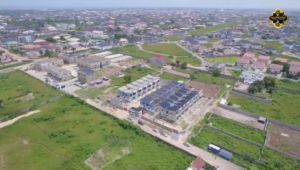
Nearly without looking up, the guard at Abraham Adesanya Estate’s entrance nods. He’s seen enough cars pass by that the custom – a slow look at the car, a few questions, and occasionally a wave that seems more ceremonial than intentional – has become habitual. It’s a minor element that’s easily missed. However, that wink is more important than it seems in a city where security is frequently the difference between a neighborhood that maintains its value and one that gradually deteriorates.
| Information | Details |
|---|---|
| Estate Name | Abraham Adesanya Housing Estate |
| Location | Ajah, Lekki, Lagos State, Nigeria |
| LGA | Eti-Osa Local Government Area |
| Security Type | Gated access, neighbourhood watch, security guards, vigilante patrols |
| Nearby Police Station | Ogombo Police Station – approximately 10 minutes from the estate |
| Known Security Risks | Petty theft, real estate scams, police stop-and-search on Lekki-Epe Expressway |
| Commissioned By | Lagos State Government |
| Reference Website | Nigeria Property Centre – Abraham Adesanya Estate |
Most towns along the Lekki-Epe corridor would be truly envious of Abraham Adesanya Estate, which is located in Ajah in Lagos State’s Eti-Osa Local Government Area. In contrast to the denser, more chaotic villages that surround portions of the Ajah axis, it is usually regarded as safe, family-friendly, and rather well-organized. Gated entry, ongoing neighborhood watch programs, security personnel keeping an eye on entry and departure, and neighborhood vigilante patrols patrolling the estate’s internal streets are all features. That’s not insignificant for a middle-class Lagos residential estate. In actuality, that is a significant amount.
However, “safe” in Lagos is always a relative concept, so it’s important to be realistic about what that actually means. The most frequently reported problem in the estate is petty stealing, which is an opportunistic crime that usually follows foot traffic and density rather than organized crime. No amount of security design can completely eliminate the entrance points created by the estate’s closeness to the freeway and the busy business areas surrounding Ajah market. Long-term residents typically recognize this with a certain pragmatism, closing gates, concealing valuables, and upholding the sense of community that formal security institutions cannot fully replace.
What transpires just beyond the estate’s perimeter presents more difficult questions. Adjacent to the region, the Lekki-Epe Expressway is a well-known location for police stop-and-search operations. Police operations at the estate’s front caused traffic to stretch from the gate all the way to Ogombo during evening rush hours, as captured in a Facebook post by Wazobia FM. It’s the kind of scenario where the equipment designed to keep people safe ends up causing problems of its own. Officers from the Ogombo Police Station, which is around ten minutes away from the estate, harassed residents and disregarded estate entry regulations, according to a 2024 FIJ Nigeria investigation. It was supposed to be comforting to be close to the police station. It’s another story entirely if that’s how it always works.
Perhaps the most underreported security issue in the region is the real estate scam dimension. Due to the estate’s appeal – its planned layout, green streets, and rising property values – fraudulent listings and criminal actors have targeted it. In one recorded instance, a guard on the estate participated in a ₦280 million property fraud, ensnaring a couple who had discovered what looked to be a genuine listing on the internet. It started on social media and ended up in court. In Ajah real estate circles, the news spreads quickly, and it should. No gate guard can reduce the danger that anyone thinking about purchasing or renting in the estate through unreliable channels is taking.
When you go through the estate on a calm weekday morning, you get the impression that the security system is actually making an effort to carry out its duties. The internal atmosphere is serene in a way that Lagos seldom permits: people strolling around the city, kids wearing school uniforms, and merchants transporting things without the tumultuous energy that characterizes more crowded areas. Abraham Adesanya Estate shows comparatively better street connectivity and walkability than alternatives like Jakande Estate, which is itself a marker of the kind of order that supports community safety over time, according to a 2026 study comparing social housing estates in Lagos published in Springer Nature.
As the Ajah corridor continues to get busier and more commercially engaged, the estate’s security status can change. Informal security measures, such as neighborhood watch groups and community vigilance, are often put to the test by this strain in unpredictable ways. The official framework is set up. The patrols, guards, and gated entry. Whether those systems will grow quickly enough to keep up with the rate of development in the surrounding area is still a bit of a mystery.
For families balancing affordability and security, Abraham Adesanya Estate continues to be one of the more popular addresses on the Lagos mainland. Not flawless. Lagos never is. However, it is practical, cautious, and deserving of the careful consideration that major relocation choices require.
Business opportunities in Abraham Adesanya Estate Lagos
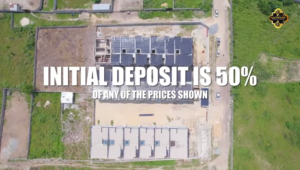
Along the Lekki-Epe Expressway, something subtly amazing is taking place. When you pass Abraham Adesanya Estate on a weekday morning, you can see it: the generator hum behind freshly painted shop facades, the traffic building next to the roundabout, and the partially constructed stores rising next to finished ones. It is not attempting to compete with Victoria Island and lacks the glossy appearance of Lekki Phase 1. But with each year that goes by, it becomes more difficult to deny this momentum.
| Information | Details |
|---|---|
| Location | Abraham Adesanya Estate, Ajah, Lagos State, Nigeria |
| Local Government Area | Eti-Osa LGA |
| Year Developed | 2001, by the Lagos State Government |
| Developer | Lagos State Development and Property Corporation (LSDPC) |
| Property Price Growth (2023) | 254.17% – among the highest in Lagos |
| Commercial Shop Rent | NGN 1,500,000 to NGN 15,000,000 per year |
| Commercial Shop Sale Price | From NGN 22,000,000 |
| Commercial Land (Expressway-facing) | Upwards of NGN 2,000,000,000 |
| Key Commercial Hubs | HFP Eastline Shopping Complex, Ojaja Mall, Ajah Market Hub |
| Reference | Nigeria Property Centre – Abraham Adesanya Estate |
Abraham Adesanya Estate was first constructed in 2001 as an affordable housing project by the Lagos State Government to relieve the city’s ongoing housing need. The planners most likely did not fully foresee what it would develop into over the next 20 years: a bustling, middle-class neighborhood situated directly on one of Lagos’s most important commercial thoroughfares. The estate’s property values increased by 254.17% in 2023, which was one of the biggest rises in the Lagos market as a whole. A number like that doesn’t just happen. It is a reflection of infrastructural investment, population growth, and the unspoken agreement among investors that this axis still has potential.
What the data indicates is supported by the commercial activity on the ground. Pharmacies, event décor companies, culinary companies, and specialty retail shops are among the businesses that operate within and around the estate. The healthcare side is anchored by the Almighty Specialist Hospital. Along the major highways that supply the estate, stores are still opening. Launched in December 2025, Ajah Market Hub is a purpose-built modern trading and commercial complex situated directly within the larger commercial zone this estate feeds into. Its goal is to revolutionize retail distribution in the Ajah-Sangotedo corridor. It’s still unclear if a project like that would achieve those goals, but the fact that it drew significant funding indicates where attitude is headed.
Businesses in the food industry in particular appear to prosper here. Young families and working professionals who frequently dine out, order takeout, or grab something quick on the way home from the expressway make up the majority of the estate’s residents. This group provides a natural clientele for tiny bars, quick-service eateries, and neighborhood cafeterias. The opening may be caused by the fact that this segment is yet underdeveloped in comparison to the amount of the population. The same reasoning holds true for childcare, after-school tutoring, and laundry and cleaning services. These are not flashy companies, but they provide services to a community that is expanding more quickly than its current infrastructure can keep up with.
A 178-square-meter retail space along Abraham Adesanya has been marketed for a variety of uses, including creative studios, event spaces, fitness centers, training facilities, and medical clinics, for individuals who are directly interested in commercial real estate. That variety of possible applications shows how adaptable commercial demand has become in this field, as well as perhaps how much the market is still working out what it really needs. A commercial shop can be purchased outright for about NGN 22,000,000, while standard shop rentals in the estate start at NGN 1,500,000 annually. Prices for commercial land that faces an expressway are rising dramatically, with some plots advertised for far over NGN 2 billion. This indicates how seriously institutional money is taking this route.
Storage and logistics should be considered independently. The estate, which is situated off the Lekki-Epe Expressway, is well-known for its quick development, reliable road access, and strategic location between Ajah and the larger Lekki axis. Because of its location, it can serve the growing residential areas farther east toward Ibeju-Lekki with courier services, parcel handling facilities, and last-mile delivery hubs. The need for strategically placed fulfillment centers won’t go away as e-commerce in Lagos keeps expanding.
For smaller businesses, property management and real estate brokerage could be the most profitable entry points. In the estate alone, there are more than 169 active real estate listings with prices between NGN 7,000,000 and NGN 650,000,000. Agents, managers, legal facilitators, and maintenance companies are needed for that amount of transactions. It’s a market that essentially builds its own network of auxiliary services. The speed at which fresh advancements are being assimilated in this field gives the impression that the gap between skilled professional management and supply is still quite large.
The Abraham Adesanya Estate hasn’t reached saturation yet. That distinction is important. The companies who are doing well here now entered the market before the rents increased to the point where early-stage operations are no longer feasible. The window is clearly becoming smaller, but it isn’t completely closed.