
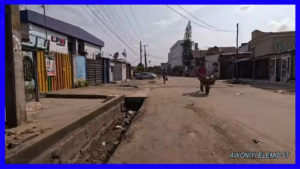
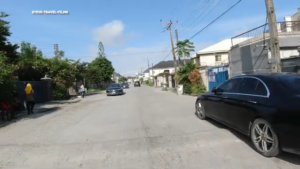




There is a compound going up on a street off Abraham Adesanya, three floors already done, no signage on the fence, no DPC approval notice visible anywhere. I asked a man working the site who the developer was. He looked at me the way people look when they have been told not to talk.
I was not there about that building specifically. I was there because of what Lagos State did on the first of May. The government raised land transaction fees by three hundred percent through something called the 2026 Blue Book. Some cases now attract fees up to one billion naira for Governor’s Consent and associated charges.
The increases touch Governor’s Consent, Stamp Duties, Registration fees, Capital Contribution Levy, and charting charges. The government says this aligns official valuations with actual market prices. Fees had apparently not been meaningfully adjusted between 2005 and 2015, which is the defence they are offering for a number that would otherwise require more explanation.
Professor Timothy Nubi of UNILAG said publicly that these hikes will discourage legitimate investment and push developers to bypass approvals entirely. I read that and thought: this is not a prediction, it is a description of what already happens. The bypass is not a future risk. It is the present operating model for a significant portion of this corridor.
In August 2025, Lagos State blacklisted one hundred and seventy-six illegal estates on the Eti-Osa, Epe, Ibeju-Lekki, and Ajah axis. That number represented estates already built, sold, and occupied without proper approvals. People are living in those structures right now, holding documents that may not protect them in court. And that blacklist came before the fee hike that tripled the cost of going legal.
The formalization cost for a developer in this market is not abstract. It directly affects whether they can price units within reach of buyers in this corridor. When you triple that cost, you do not eliminate the pressure to build. You change who absorbs the cost and how much of it disappears into unofficial channels.

What shifted my thinking on this was a conversation with a developer I have known for three years. He has built legitimately in this corridor before, paying the fees, running the approvals, doing the whole thing properly. He told me that at the new rates, the cost of formalization on his next project exceeds his projected profit margin on ground-floor units.
He was not angry when he said this. He was calm in the way of someone who has already made a calculation and arrived at a conclusion. He said he would build the project and handle the approval question when the money came. He used the phrase "handle it later" in a way that made clear he had already decided not to handle it at all.
This is what a fee structure that no one can realistically absorb produces. It does not eliminate the illegal estate. It makes the developer more deliberate about staying unofficial. The government has essentially raised the price of legality above what significant parts of this market will pay.
Developers in Lekki Phase 1 and Banana Island face the sharpest increases under the new framework. Those are projects with enough margin to potentially absorb the cost. It is the mid-range developers in the Ajah corridor, building blocks of six to twelve flats for working professionals, who have nowhere to put the extra expense.
The person who ends up carrying this policy is not the developer. It is the buyer who purchases a unit in an estate built outside the approval system because the approval system became too expensive. They pay market price for a property that cannot be properly titled. They discover this on the day they try to use it as collateral, or transfer it, or sell it.
Lagos State had legitimate grounds to update fees that had not moved in twenty years. The adjustment they chose was not calibrated for the market that actually exists in the Ajah corridor. When the cost of doing something legally exceeds what the market will bear, people do not stop doing it. They stop doing it legally.


Lukmon Isiaq is a Lagos-based property researcher and street-level writer who has spent years studying the Ajah corridor the way most people never bother: on foot, in compounds, and in conversation with landlords, tenants, caretakers, and estate agents who operate where the listings end and the real story begins.
He is not a property developer. He is not a real estate marketer. He is the person you call before you sign anything. The one who has personally walked flood-prone streets after October rain, argued with agents over undisclosed charges, and documented how the Lagos housing market actually works for ordinary Nigerians trying to make serious decisions with serious money.
His writing on Abraham Adesanya Estate Lekki Ajah covers the Ajah corridor, Ikota Villa, Ajao Estate, Ogudu GRA, and the wider Lekki property market with one consistent standard: the honest version, not the brochure version.
He understands the gap between what a listing promises and what a tenant discovers on their first rainy season.


