




The two men did not shout at each other, which surprised me. I was expecting shouting.
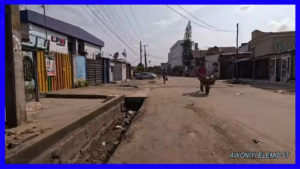
They stood at the edge of a plot off the Eleko axis in Ibeju-Lekki, each one holding a folder. Same plot. Same dimensions on paper. Different companies that had sold it to them, different agents who had collected the money, same sun pressing down on the same red earth that neither of them owned in any way that would hold up in court.
Emeka had paid three million, eight hundred thousand naira. In installments over fourteen months, which is the kind of financial discipline that deserves to be rewarded. Tunde had paid four million, one hundred thousand, outright, in a single transfer, because the agent had told him there was another buyer circling the property and he needed to move fast.
There is always another buyer circling the property.
I had come to Ibeju-Lekki that morning because a contact had called me the previous Thursday and said, plainly, that something was happening on his street that I needed to see. He is not a dramatic person. He told me to come on a Saturday because that is when people drive out to check their land, and when you have one plot with five sets of documents floating around Lagos, Saturday mornings get interesting.
What I did not expect was to spend forty minutes watching two men who had both been defrauded quietly calculate which of them had been defrauded more. There is a particular kind of Lagos mathematics that happens in these situations. Two people who have both lost, both trying to determine who lost worse. The answer is always the same: both of you, badly, and the person who did it is not standing on this land with you.
The company that sold to Emeka had an office in Lekki Phase 1. Glass door. A receptionist. A brochure with drone photography and a development timeline and a quote from the managing director about building the Lagos of tomorrow. I have seen this brochure. It is a good brochure. The company that sold to Tunde operated through an agent who operated through another agent, and the paperwork trail goes cold somewhere around Opic.
This is what property developers and real estate associations do not like to say at their panels and conferences: the sophisticated end of this fraud is not men with fake receipts operating from motorcycles. It is companies with websites and Instagram pages and testimonials from Phase 1 buyers who genuinely got land, because Phase 1 buyers always get genuine land. Phase 1 is real. It is what makes Phase 2 sellable. And Phase 2 is where the same plot starts appearing in five different folders.


I have spoken to people who lost land in Ibeju-Lekki to this kind of scheme who told me they did their due diligence. And they had. They checked the company registration. They visited the site. They saw the survey beacons. They collected receipts on company letterhead. They did everything a reasonable person is supposed to do, and it still happened. Because the document that would have told them clearly whether that title was clean is the one that costs money and time and the right contacts to verify, and most agents are not going to slow down a sale for the sake of your peace of mind.
That document is the Governor’s Consent. Or a Certificate of Occupancy. Or a deed of assignment with a clean title history going back to the original allocation. What most buyers in Ibeju-Lekki actually receive is something that looks like documentation but functions more like a receipt with a company stamp on it. It is proof that you paid. It is not proof that what you paid for belongs to you.
I will say this plainly, because I do not know how else to say it. Some of the companies selling land in that corridor right now are not property developers. They are people who understood that Ibeju-Lekki sounds like the future, that buyers in Abuja and Port Harcourt and in the diaspora are hungry for a foothold in Lagos, and that the gap between what someone wants to believe and what is actually true is large enough to build a business in. They built a business in it.
Emeka and Tunde are still resolving their situation through a lawyer. The last I heard, there were three other buyers with documents for that same plot.
Before you send any money to any developer for land in Ibeju-Lekki, hire your own lawyer. Not the developer’s recommended lawyer. Your own. Ask that lawyer one specific question: can you trace this title from the original gazette allocation to today, without any gap in the chain.
If they cannot answer that question with paper in front of you, you do not have land. You have a story.


Lukmon Isiaq is a Lagos-based property researcher and street-level writer who has spent years studying the Ajah corridor the way most people never bother: on foot, in compounds, and in conversation with landlords, tenants, caretakers, and estate agents who operate where the listings end and the real story begins.
He is not a property developer. He is not a real estate marketer. He is the person you call before you sign anything. The one who has personally walked flood-prone streets after October rain, argued with agents over undisclosed charges, and documented how the Lagos housing market actually works for ordinary Nigerians trying to make serious decisions with serious money.
His writing on Abraham Adesanya Estate Lekki Ajah covers the Ajah corridor, Ikota Villa, Ajao Estate, Ogudu GRA, and the wider Lekki property market with one consistent standard: the honest version, not the brochure version.
He understands the gap between what a listing promises and what a tenant discovers on their first rainy season.


