

The landlord spread the photographs across the table like he was dealing cards, which is more or less what he was doing. Six-bedroom detached, Magodo GRA Phase 2, own compound, boys’ quarters, floors that had been expensive once. He wanted my opinion on the price he was asking. I looked at the photographs for a while, then asked him when he had last driven through the estate on a weekday morning.
He said he lived there. He drove through it every day.
I asked how long it took him to get from his gate to the CMD Road junction.
He was quiet for a moment. “Forty-five minutes sometimes. But that is Lagos traffic.”
It is not just Lagos traffic. It is the specific traffic of an address that has not meaningfully improved a road or redesigned a junction since the late 1980s, while the population density around it has multiplied in every direction and the arterial roads feeding into it were not built for what they are now being asked to carry. That is a different problem from Lagos traffic. And it is the kind of problem that eventually appears in the price, whether the landlord believes in it or not.
Magodo was a real thing. I want to be clear about that before I say anything else, because there is a version of this conversation that sounds like I am dismissing what the estate represented, and I am not. When Magodo GRA was developed, it was planned residential infrastructure of a kind that Lagos was not producing in volume. Large plots, setbacks that gave you breathing room, streets that had been thought about. The families who built there in the 1970s and 1980s were making a serious decision with serious money, and for two decades that decision held its value in the way that good decisions are supposed to.
What happened after is a Lagos story, which means it is a story about what happens when infrastructure investment stops and population pressure does not.
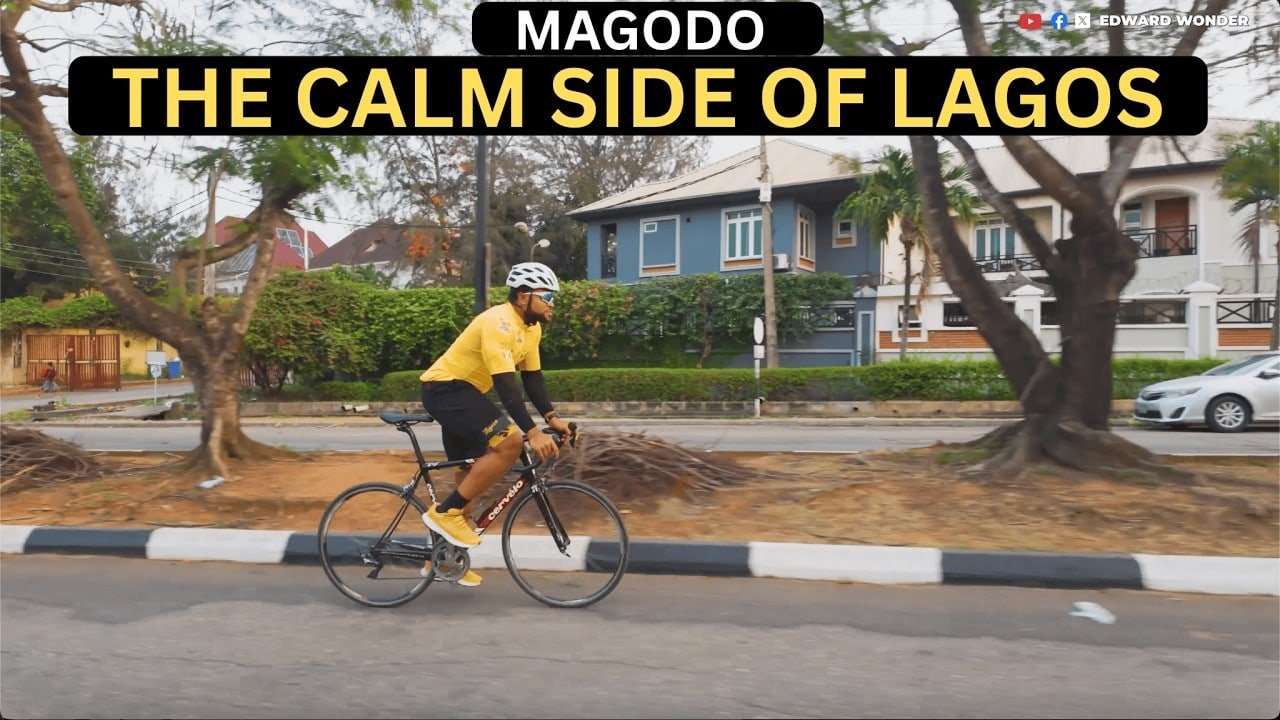
The thing that shifted my thinking on this was not the traffic or the roads, which I knew about. It was the land. In 2006, a Supreme Court judgment in favour of the Ojora chieftaincy family created a crisis in Magodo Phase 1 that sent demolition teams into the estate and sent shockwaves through every property lawyer in Lagos who had clients with Magodo titles. The crisis was eventually managed, in the way Lagos manages these things, which is to say incompletely and with residual anxiety that never fully resolved. I have spoken with buyers who looked at Magodo properties in the last five years and walked away not because of the price, not because of the roads, but because their lawyers asked questions about the root of title and did not like the answers they were getting. That is a specific kind of reputational damage and it compounds slowly, the way damp does in a wall you have not opened.
The addresses that are taking Magodo’s position are not one place. That is what I find interesting when I look at where the money is actually moving. Old Ikoyi has always been its own category and remains so, but it is not absorbing the Magodo demographic at scale because the entry price is a different conversation entirely. Lekki Phase 1 absorbed a generation of that movement and is now itself showing the stress of density that nobody planned for. What I am watching, and I cover the Ajah corridor specifically so I am watching this from close range, is a quieter migration toward estates with demonstrably cleaner titles, functional internal roads, and management associations that are actually collecting and spending their levies. Victoria Garden City. The better-planned estates between Chevron and Osapa. Parts of Abraham Adesanya Estate itself, where the original government layout provides a foundation that the newer scatter-developments on the expressway cannot match on paper.
This migration does not make the glossy magazines because it is not aspirational enough for a headline. Nobody is writing “Family Leaves Magodo for Ajah” as a triumph. But the families are moving, and they are making that choice with clear eyes, which is more than I can say for some of the choices that were made in the 1980s and 1990s when Magodo’s prestige was at its peak and due diligence was considered an insult to the landlord.
Here is the uncomfortable thing I will say to every developer currently marketing a new estate in Lagos as the next prestigious address: the prestige is borrowed from the infrastructure, and the infrastructure is borrowed from the government, and the government has a long record of not returning what it borrows. The estates that hold value in this city over twenty years are the ones whose internal governance is strong enough to maintain themselves when the government does nothing. That is a management question more than a location question, and most developers are not selling management. They are selling photographs.
If you are choosing between a Magodo address and something newer on the Lekki corridor, pull the title history back to the root grant. If anyone in that chain is a chieftaincy family, a military allocation, or a 1970s government scheme that was never fully regularised, find out exactly what was resolved and what was not before you commit anything.
The address will not protect you. The document will.

Lukmon Isiaq is a Lagos-based property researcher and street-level writer who has spent years studying the Ajah corridor the way most people never bother: on foot, in compounds, and in conversation with landlords, tenants, caretakers, and estate agents who operate where the listings end and the real story begins.
He is not a property developer. He is not a real estate marketer. He is the person you call before you sign anything. The one who has personally walked flood-prone streets after October rain, argued with agents over undisclosed charges, and documented how the Lagos housing market actually works for ordinary Nigerians trying to make serious decisions with serious money.
His writing on Abraham Adesanya Estate Lekki Ajah covers the Ajah corridor, Ikota Villa, Ajao Estate, Ogudu GRA, and the wider Lekki property market with one consistent standard: the honest version, not the brochure version.
He understands the gap between what a listing promises and what a tenant discovers on their first rainy season.
